TOS Movie Reviews
Star Trek: The Motion PictureStar Trek II: The Wrath of KhanStar Trek III: The Search for SpockStar Trek IV: The Voyage HomeStar Trek V: The Final FrontierStar Trek VI: The Undiscovered Country
Star Trek: The Motion Picture
Synopsis


When a huge cloud approaches the Sol system and threatens to destroy all life on Earth, Admiral Kirk assumes command of the newly refitted Enterprise, reducing Capt. Decker to his first officer. On their way to intercept the cloud, Spock, who sensed its presence when he was on Vulcan, rejoins the crew. When the entity that calls itself "V'ger" scans the ship, the Deltan navigator Lt. Ilia is absorbed and later returned as an android. Spock and Kirk find out that V'ger routinely scans and saves everything it encounters along its path. V'ger turns out to be an enormous machine built for the sole purpose of seeking for and eventually merging with the Creator of its distant relative, the space probe Voyager 6 that was launched from Earth a long time ago. The entity is accordingly unsatisfied when it discovers that humans, primitive "carbon units", were the Creators. But V'ger, in the form of the Ilia probe, agrees to merge with the Creator, in the form of Capt. Decker, to a totally new lifeform.
Review
"Star Trek: The Motion Picture" was shot in 1978 and released in late 1979, some ten years after the end of The Original Series. The success of "Star Wars" in 1977 was clearly the incentive for the studio bosses to make Star Trek into a movie, rather than the already planned new TV series. Yet, for all we can tell the production of the first Star Trek movie was rather influenced by "2001: A Space Odyssey", especially as the slow pace of the story with its incredibly long visual effects sequences is concerned. Although "The Motion Picture" turned out a commercial success, it has been criticized by both fans and professional reviewers as "The Slow-Motion Picture" or something along these lines. Well, I have to agree that the plot of "Star Trek: The Motion Picture" is quite thin and could as well have been covered in a usual TV episode, especially considering the undeniable similarities to TOS: "The Changeling". Yet, I think that most reviewers were spoiled by the haste of the old TOS episodes as well as of the first Star Wars movie, so they focused on this lack of action as an alleged deficiency in the first Trek movie and failed to recognize its cineastic qualities.
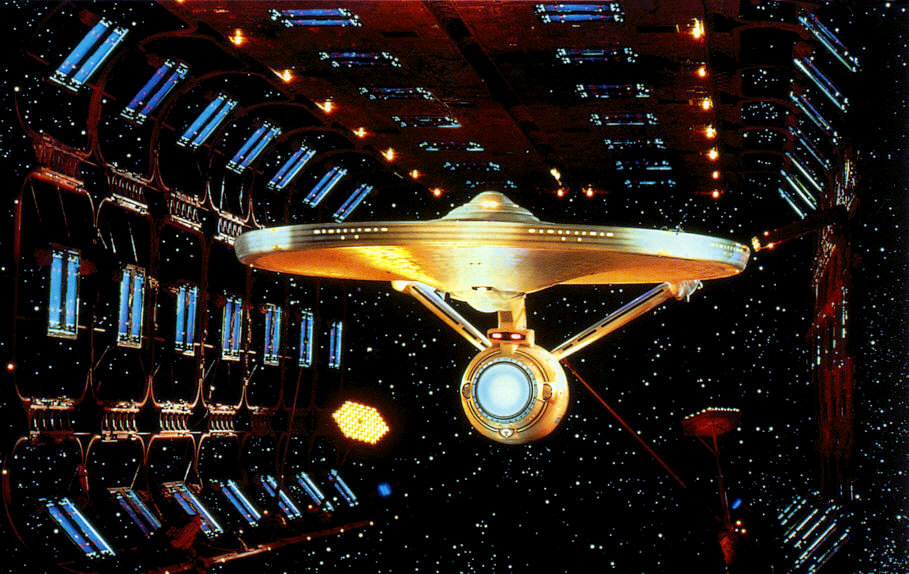
I don't think that taking its time is a drawback because a movie should make use of all the advantages the cinema offers over the small TV screen, and "The Motion Picture" definitely does. I'm still deeply impressed with the stunning realism, in particular of the scene with the Enterprise in the drydock. "The Motion Picture" thrives on long VFX scenes and excellent pointed dialogues, although neither necessarily advances the plot. Most importantly it gives us a sense of the excitement to go out into space and encounter the unknown like perhaps no other science fiction film ever made. The alien cultures of the Klingons and the Vulcans are worked out quite well, and they don't just wind up as humans with make-up. Of course, this applies even more to V'ger, an entity that remains mysterious until the end and that does not know and does not even want to communicate with the primitive "carbon units". All this is supported by an almost ingenious score by Jerry Goldsmith, with memorable special themes for the Federation, the Klingons, Ilia and V'ger.
The actors are still "fresh", and they continue much in the same fashion as they did in TOS. This gives the "The Motion Picture" a familiar and overall bright and optimistic atmosphere, unlike almost all Trek movies to follow. Unfortunately, Ilia and Decker, who had both a lot of potential (also for the possible second TV series), were sacrificed and never seen again.
I think it was a wise decision to conceive "The Motion Picture" as a sequel to TOS with some visual updates, rather than a reboot or remake, because this resulted in a continuity that would remain uninterrupted for 40 years. Although still a bit more could have been done to preserve some TOS style elements exactly as they were, I'm a big fan of the set, prop and costume design of this movie. Only the uniforms could have needed some more color. "The Motion Picture" established a visual standard for what is known as the "second generation of Star Trek" today, a long run of movies and series that lasted until 2005.
Annotations
- Nitpicking:
- "Vulcan has no moon." This is what Spock told Uhura in TOS: "The Man Trap". Yet, in the movie's kolinahr scene two enormous celestial bodies are visible in Vulcan's sky. Obviously someone noticed this apparent error, and for the Director's Cut DVD a completely new Vulcan landscape with huge statues and without celestial bodies was created, one that is also closer to the original sketches for the movie.
- Why do the Klingons suddenly have ridges on their foreheads in TMP? This question troubled generations of fans. But it was never even supposed to be asked, for it was commonly retroactively explained as a make-up shortcoming of TOS. The real Klingons were said by Gene Roddenberry to have always looked as in TMP.
- Kirk tells Scott that the alien machine is three days away from Earth, and that "the only starship in interception range is the Enterprise". In other words, Starfleet has nothing within three days of Earth, the center of the Federation, or within three days of that machine if you will, than a barely operational ship that needs to be launched prematurely, with untested warp engines!
- The diameter of the cloud is stated to be as much as 82 AUs, and as such it would envelop the whole solar system and possibly push planets out of orbit (although the solid machine inside is still small enough to orbit Earth). The diameter was later revised to more realistic 2 AUs in the Director's Cut.
- Where does V'ger/Decker vanish in the end, without destroying Earth's surface? It must have been something like a parallel dimension.
- More inconsistencies on a separate page.
- Remarkable dialogues:
- "Jim, V'ger expects an answer." - "An answer? I don't know the question." (Decker and Kirk)
- "V'ger is a child. I suggest you treat it as such." - "Spock! This child is about to wipe out every living thing on Earth! Now, what do you suggest we do? Spank it?" (Spock and McCoy)
- "Decker." - "Fascinating. Not 'Decker unit'." (Ilia probe and Spock)
- Remarkable quotes:
- "Enterprise. What we got back didn't live long. Fortunately." (comm voice, after the fatal transporter failure)
- "And they probably redesigned the whole sickbay too. I know engineers. They love to change things!" (McCoy)
- "Jim, I want this. As much as you wanted the Enterprise, I want this." (Decker)
- Remarkable lifeform: "carbon units"
- Remarkable ship: the Enterprise, the best one they ever had, redesigned by Andrew Probert
Rating: 8
Star Trek II: The Wrath of Khan
Synopsis


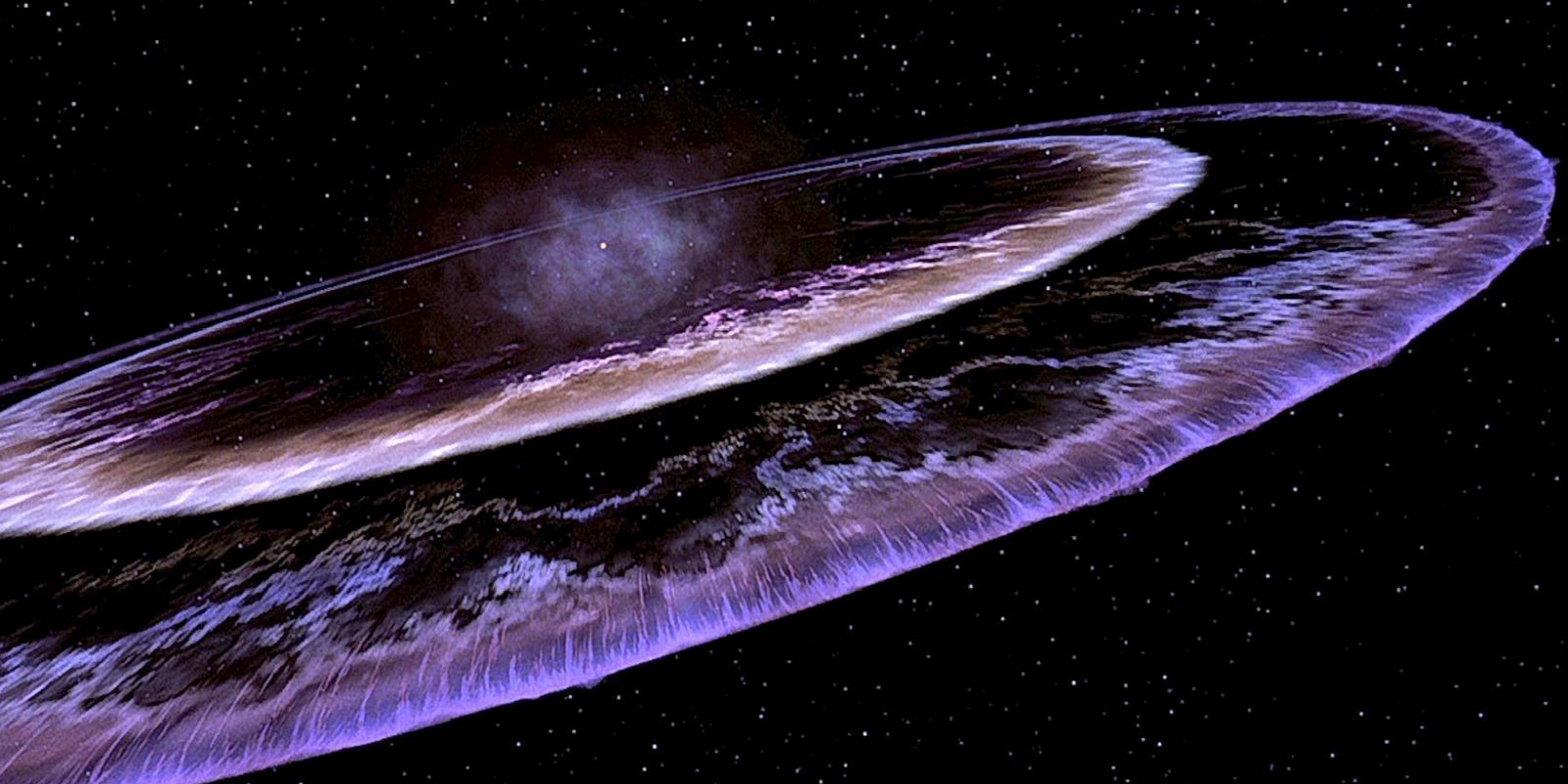
Khan Noonien Soong, driven by his revenge on Kirk, who once dropped him and his genetically enhanced crew on a lonely planet, kidnaps Capt. Terrell and Chekov, who are on a planetary survey mission for the Genesis project. Khan seizes command of their ship, the USS Reliant, and steals the powerful Genesis device that is capable of creating Class-M planets from any form of matter. The scientists who developed the device, among them Carol Marcus, who once dated Kirk, and their common son David, are trapped on the planetoid Regula, from where the Enterprise rescues them before taking on Khan. After losing the fierce battle in the Mutara Nebula, Khan activates the device. Spock sacrifices his life to repair the Enterprise's warp drive and to save the ship from the imminent explosion of the Genesis device. His body remains on the newly created planet Genesis.
Review
"More action" was quite obviously the prevailing motto of this film. "Star Trek: The Wrath of Khan" brings the excitement that the movie audience may have hoped for and that was missing in "Star Trek: The Motion Picture". While it is visually not quite as impressive as its predecessor (owing to its lower budget), "The Wrath of Khan" is full of story highlights. For many years the battle in the Mutara Nebula remained the most thrilling action sequence ever to appear in a Trek movie or episode.
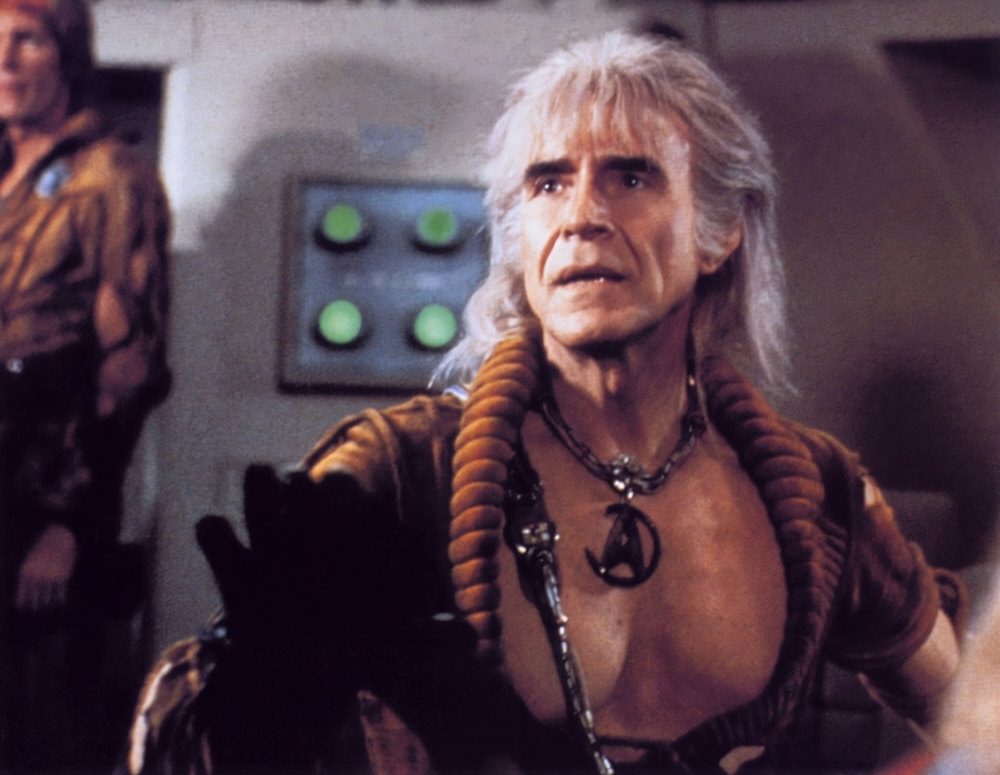
It was a great idea to bring back Khan from TOS: "Space Seed", one of the more impressive guest characters of TOS. Khan is a fan favorite as a villain still today, because he has a strong motivation, because he is very emotional and because he is a match for Kirk. Speaking of emotions, it is clear that "The Wrath of Khan" stands out from the usual Trek stories because it allows the unspeakable to happen when Spock dies in the end. The story leaves a loophole for him to be resurrected because of something that may happen to him on the Genesis planet, but it is the first time in Star Trek that a regular character dies and a very daring move as such. On the downside, I have to say that the cast hits the wall as the display of much stronger emotions than in the TV series is concerned. Shatner and Nimoy, just as well as Montalban, are not entirely successful in showing how strongly their characters are personally involved. As opposed to the cautious performances in "The Motion Picture" (that seems a bit like TV routine in retrospect), I think they are over-acting here.
I also sadly miss the carefulness in writing, directing and editing of "The Motion Picture". "The Wrath of Khan" is full of technical and logical deficiencies, and not only the famous "I-never-forget-a-face-Mr.-Chekov" mistake (that director Nicholas Meyer was fully aware of). Plenty of inconsistencies arise especially from the apparent omnipotence of the Genesis device, which is a prime example of a plot device that never becomes credible and that distracts from other, perhaps more important elements of the story.
Annotations
- Nitpicking:
- The simulator scene seems pretty dangerous for cadets to be practical. Would they really consider using charges and explosions for training purposes?
- The science officer of the Reliant reports that Ceti Alpha VI (or what he thinks is this planet) has a "limited atmosphere, dominated by craylon gas, sand, high-velocity winds
- incapable of supporting lifeforms." If the atmosphere is really *dominated* by the exotic craylon gas instead of nitrogen, it is doubtful that human beings could survive there the way we see later (Khan and his people may have breathing apparatuses but definitely no functional airlock). So most likely the statement is just very imprecise, and he actually means that there are considerable amounts of that gas besides nitrogen and oxygen.
- "I never forget a face, Mr. Chekov." No review of this movie could be complete without a note on this famous continuity riddle, although we are able to explain it away in a way that Khan may have encountered Chekov off-screen.
- The explosion of Ceti Alpha VI shifted the orbit of Ceti Alpha V so it became a wasteland. But could the two planets have been so close together that this was possible? Also, even if the explosion was never registered, shouldn't Starfleet have kept a record on this previously charted star system, which would have made it possible to identify the planet Ceti Alpha V regardless of the existence of Ceti Alpha VI? Starfleet as a scientific organization should really rely on more than just planet counting.
- When the Reliant approaches the Enterprise and no communication can be established, Saavik reminds Kirk of General Order 12. While she does not have the chance to finish the sentence, this regulation must be about raising the shields. Why in the world does Kirk not follow the order? His foremost duty is to ensure the safety of the ship - a ship full of kids in this case. But Kirk's order to raise shields comes as late as Spock reports that the Reliant is locking phasers!
- The Genesis device explodes in a huge plume of fire. But if it just converts the matter of the Mutara Nebula, how can a planet be formed out of it? Even though it is nearly omnipotent anyway, the matrix was definitely not configured to accomplish that, as it was supposed to be detonated on an already existing planet. Rather than that, the explosion encompasses the Regula asteroid, which is then transformed to a planet. And unless a star with the appropriate radiation spectrum is coincidentally at the right distance from the explosion (which is exceedingly unlikely), the Genesis device even creates a sun!
- More inconsistencies on a separate page.
- Remarkable dialogues:
- "He's never what I expect, Sir." - "What surprises you, Lieutenant?" - "He seems so... human." - "Nobody's perfect, Saavik." (Saavik and Spock)
- "Mister Spock, the ship is yours." - "Jim, be careful." - "*We* will." (Kirk, Spock and McCoy)
- "You okay, Jim? How do you feel?" - "Young! I feel young!" (Bones and Kirk)
- Remarkable quotes:
- "Botany Bay. Botany Bay? Oh no!" (Chekov)
- "Jim, I'm your doctor, and I'm your friend. Get back your command. Get it back before you turn into part of this collection. Before you really do grow old." (Bones)
- "Khaaaaan!" (Kirk)
- "Remember." (Spock)
- "I have been... and always shall be... your friend." (Spock)
- Remarkable scene: Spock's death is the arguably saddest scene ever to appear on Star Trek.
- Remarkable ship: the Reliant, actually the first Starfleet ship design other than the Enterprise
- Remarkable fact: Kirk was the first cadet to successfully pass the no-win Kobayashi Maru test - because he modified the test parameters so that there was a chance to win.
Rating: 8
Star Trek III: The Search for Spock
Synopsis


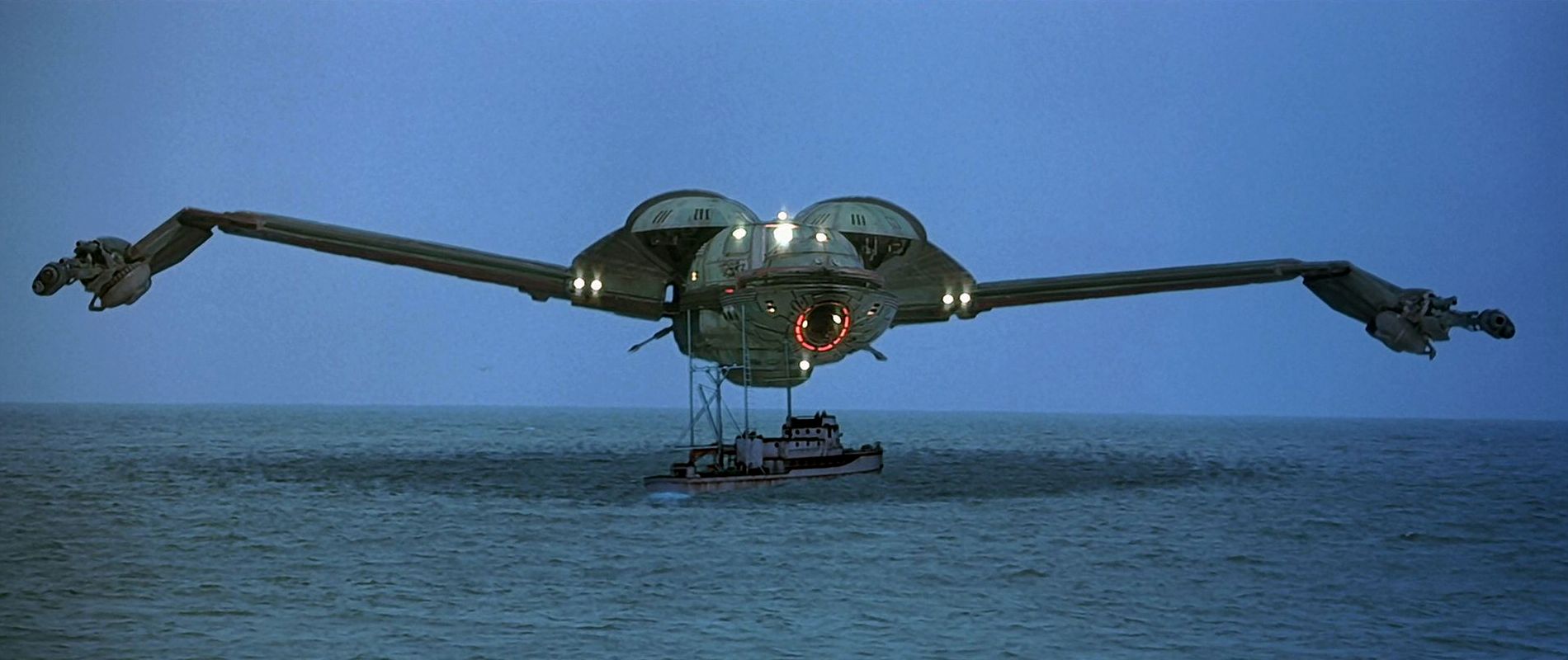
When the Enterprise returns to Earth Spacedock, it is found that McCoy is carrying Spock's katra, the immortal soul of the Vulcan who died saving the ship. In order to separate McCoy and Spock, Kirk and his senior crew hijack the Enterprise and return to Genesis. In the meantime, at the newly formed planet Genesis, a Klingon Bird-of-Prey shows up and destroys the survey ship USS Grissom. David Marcus and Saavik, who are exploring the surface of Genesis, find the rejuvenated body of Spock, but are later captured by the Klingons. When the battle-damaged Enterprise arrives, the ship is already awaited by the warlike Klingon Commander Kruge, who wants to get his hands on the Genesis technology. To avoid the capture of his ship by the Klingons, Kirk has to destroy the Enterprise. The Klingons kill his son David. After seizing control of the Klingon ship, the crew barely escape the destruction of the planet that has become unstable. They take Spock's body to Vulcan, where a procedure to reintegrate his mind into his body is performed.
Review
The second part of a trilogy often suffers from the limitation that it is meant to tie together the first and the final part, and that there are accordingly fewer options to kick off and to conclude the story. This problem is particularly apparent in "Star Trek: The Search for Spock" in its function as a sequel to the immensely successful "Star Trek: The Wrath of Khan". The preceding movie left just a small loophole for Spock to come alive again when he said "Remember" to Doctor McCoy, which could have meant anything at the time it was shot. The premise of "The Search for Spock" is additionally odd because in the real world the title readily gives away that Spock would come back, whereas in the story it is a chain of unlikely coincidences that allows to revive Spock.
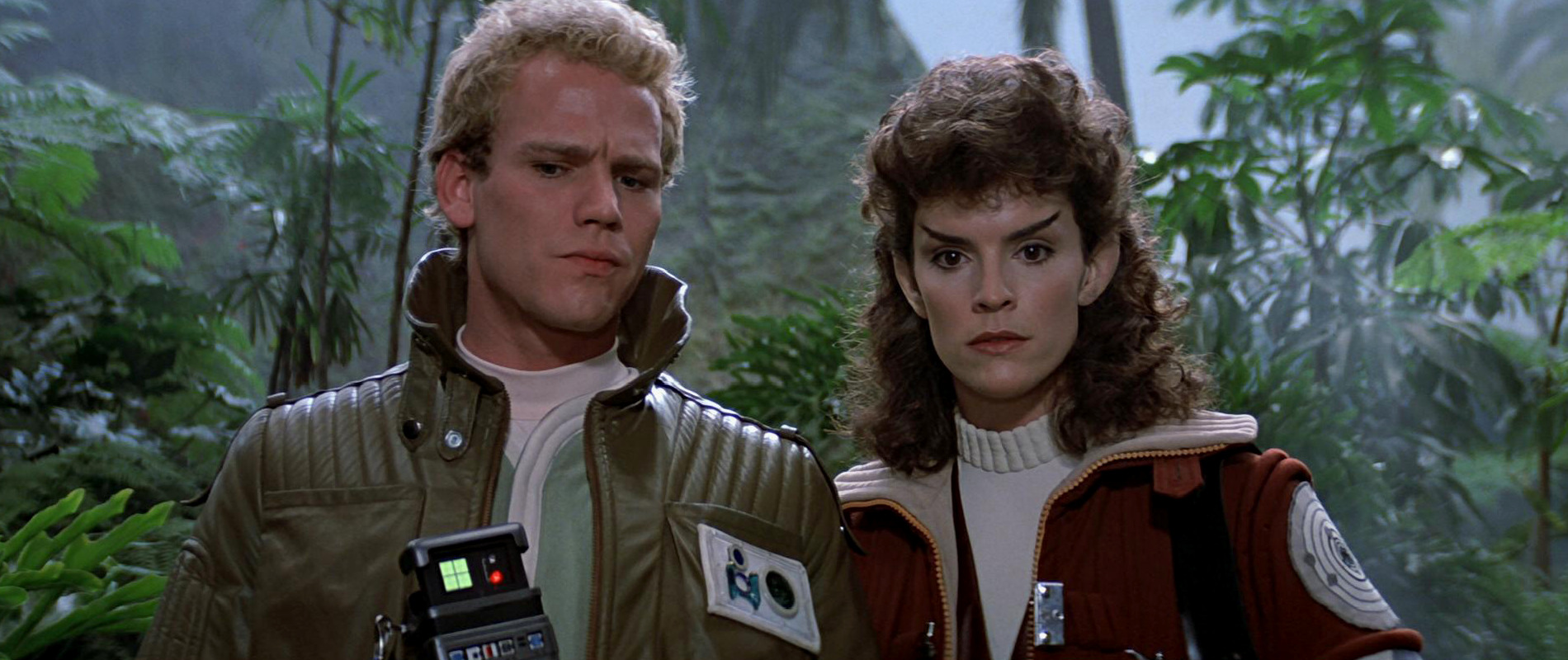
Anyway, I think it is an intelligent idea that a Vulcan's mind can be preserved by transferring it to another person, and that McCoy of all people is carrying Spock's mind. In some way the character of Spock is present the whole time, although Leonard Nimoy (who directs the movie) only appears at the end. It is good to see that Bones gets something more to do than usual, and even Sulu and Scotty have a few nice scenes. Most of all I like how the strong friendship among the main characters prevails over Federation bureaucracy. David Marcus, on the other hand, isn't as strongly involved as he could have been. He doesn't get much to do except for taking care of the young Spock together with Saavik, and he is killed by the Klingons without previously meeting his father in this movie. This is quite disappointing in the story, and a missed opportunity to give it even more of a dramatic impact. The way it is shown, the Enterprise is the much bigger loss than David (at least, it was like that when I first watched it). Regarding Saavik, why was Kirstie Alley replaced by Robin Curtis in this role, an actress who couldn't look more different? Why wasn't the character just abandoned, not being very important anyway?
"The Search for Spock" also continues the trend of Star Trek movies being too lofty and emotionally overloaded. Although it is not quite as noticeable as in "The Wrath of Khan" ("Khaaaaan!") and will be still worse in "The Final Frontier", the actors have to deliver sometimes awkward lines and make strange gestures. They sometimes have a hard time not to let their roles appear silly. Especially Kirk's reaction to his son's death and his struggle with Kruge is not really convincing, which I think is in part Shatner's fault.
Speaking of Kruge, he and his Klingon company is what I dislike about the movie. These Klingons are just plain villains, they lack any reason or honor. Even though it would take a few years for TNG to re-invent the Klingons as a very respectable race, I think that "The Search for Spock" should have done better than showing them as a rogue gang. Kruge himself appears much like a cheap reissue of Khan anyway. The latter had at least strong emotions driving his actions.
Overall, I think that "The Search for Spock" is a very enjoyable movie but falls a bit short of its predecessor and its successor. Even in consideration of the limitations of a second part the movie could have made more of its good premise to bring back Spock.
Annotations
- Nitpicking:
- Admiral Morrow says, "The Enterprise is 20 years old". This is wrong, if we assume that she is still the same ship that Captain Pike commanded some 30 years ago. The refitted version, on the other hand, is barely 15 years old at the time of the movie.
- Kirstie Alley did not reprise her role as Saavik and was replaced with Robin Curtis. But why was no attempt made to let Curtis appear at least a bit like her predecessor? With her curly hair and especially the pointed eyebrows she couldn't possibly look more different.
- The microbes in Spock's torpedo coffin are quickly evolving to huge worms on Genesis. Which special condition on the planet caused by the Genesis effect could enable a fast evolution, unless time itself were accelerated there? The sunset is very fast, but hardly because of the Genesis effect. However, the seasons or the climate are changing quickly as well. If an evolution had taken place, it would have required the animals to procreate, to spread out and to adapt over hundreds or rather thousands of generations, and not to slowly crawl around the coffin all the time. And why is Spock aging so quickly on Genesis, but not anyone else? Shouldn't he rather "evolve" like the microbes in his coffin?
- David Marcus tells Saavik that he used unstable protomatter for the Genesis device, which he believes is the reason why the planet is breaking apart. Whilst this objectionable approach is a part of the story, wouldn't it be a much more plausible explanation for the failure that the Genesis device was in no way designed to detonate on a starship far away from a planet?
- More inconsistencies on a separate page.
- Remarkable dialogues:
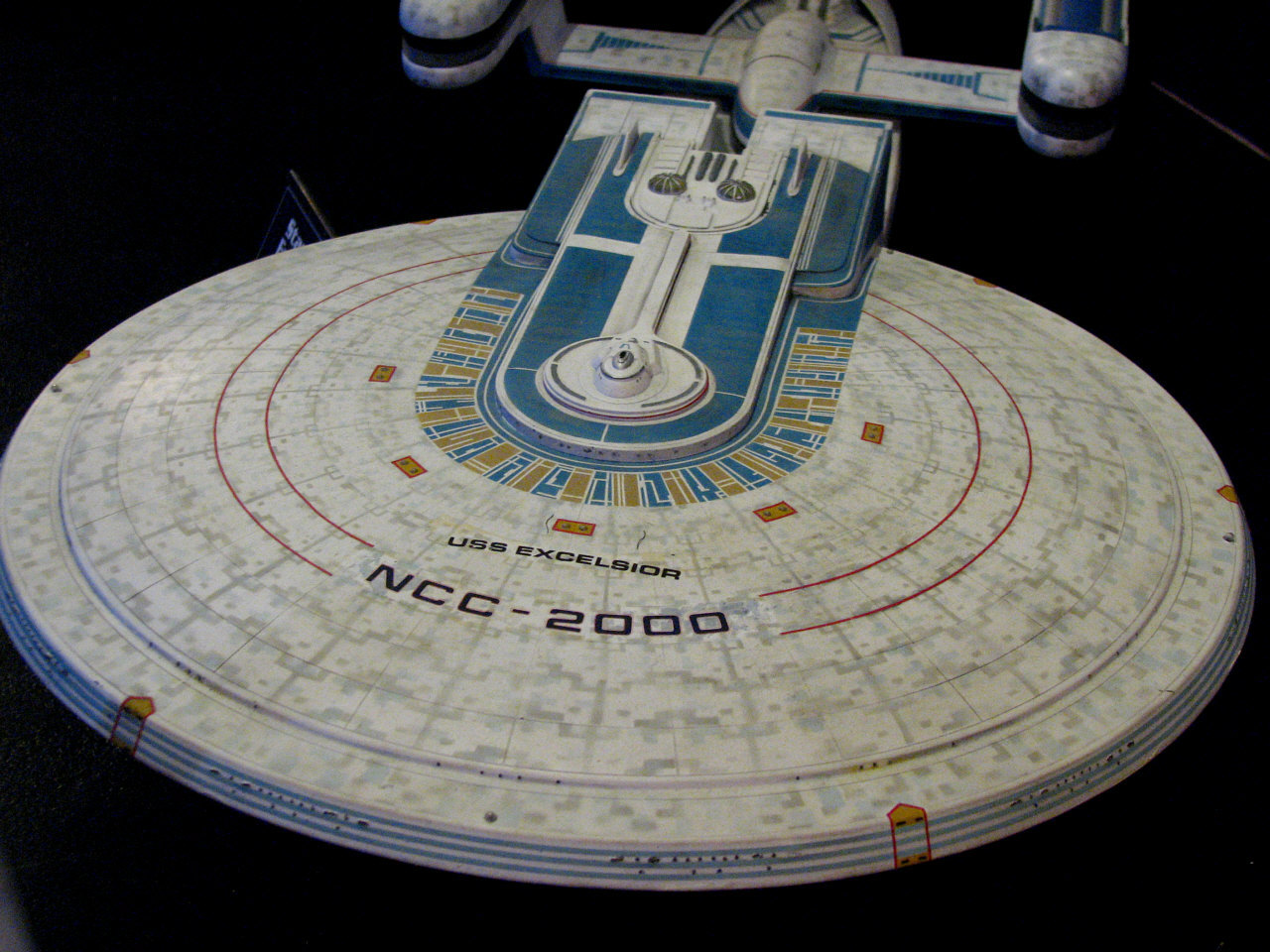
- "She's supposed to have transwarp drive." - "Aye, and if my grandmother had wheels she'd be a wagon!" (Sulu and Scotty about the Excelsior)
- "You must bring them to Mount Seleya and only there can both find peace." -"What you ask is difficult." - "You will find a way, Kirk. If you honor them both, you must." - "I will. I swear." (Sarek and Kirk)
- "My God, Bones! What have I done?" - "What you had to do. What you always do. Turned death into a fighting chance to live." (Kirk and McCoy after the destruction of the Enterprise)
- "Wait. You said you would kill me." - "I lied." (Maltz and Kirk)
- Remarkable quotes:
- "Don't call me tiny!" (Sulu)
- "Jim... your name is Jim." (Spock)
- Remarkable scene: the destruction of the Enterprise that to me was just as sad as Spock's death
- Remarkable lifeforms: There are Tribbles in the bar scene with McCoy. ;-)
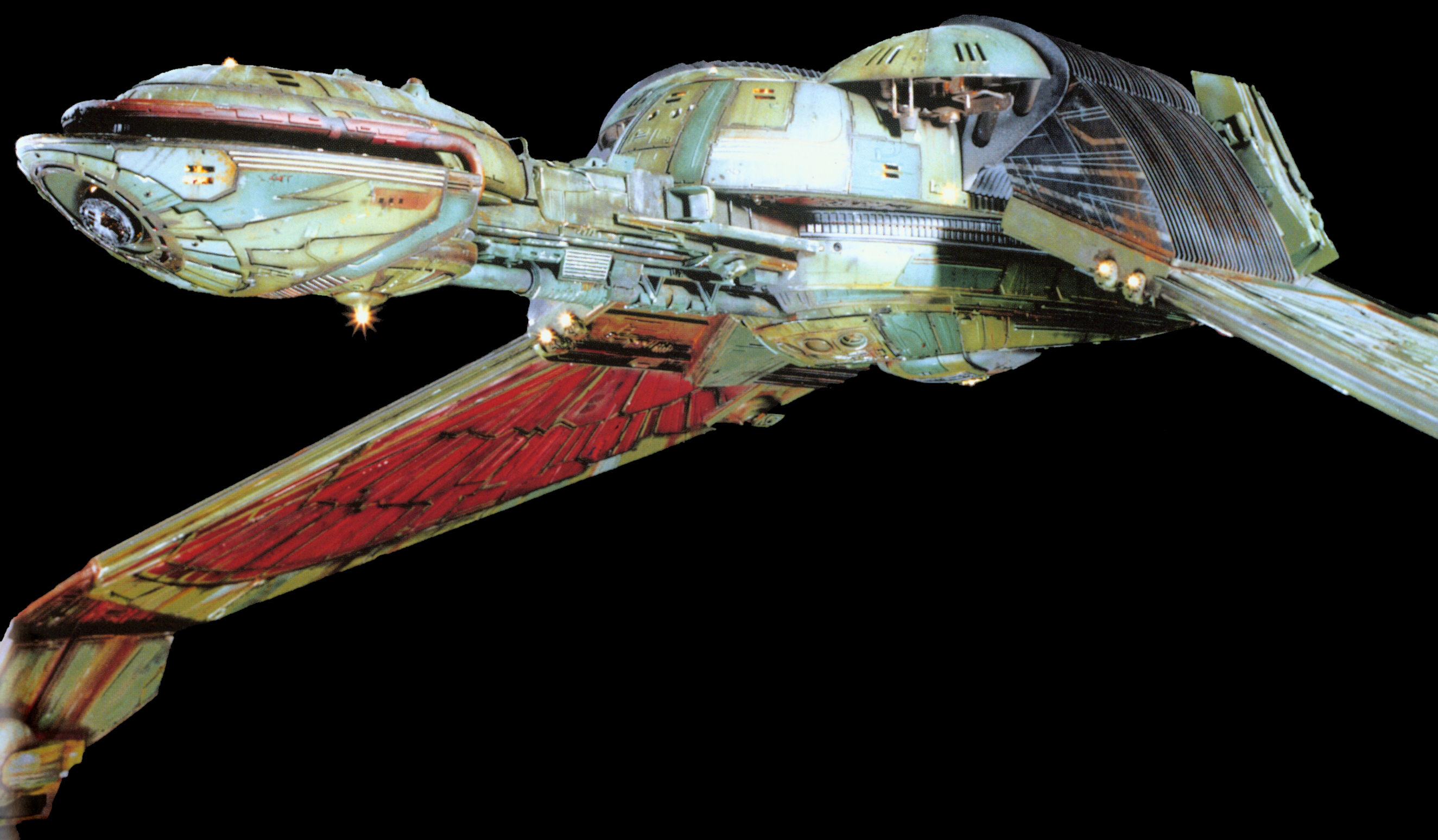
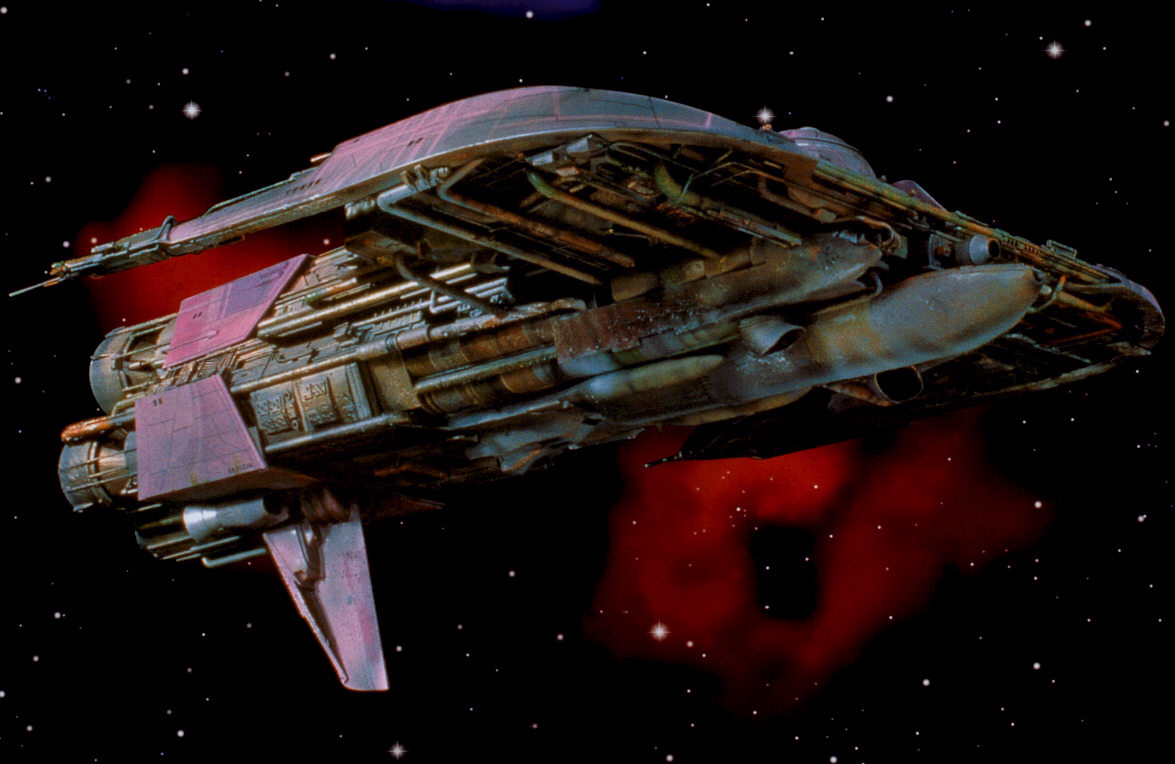
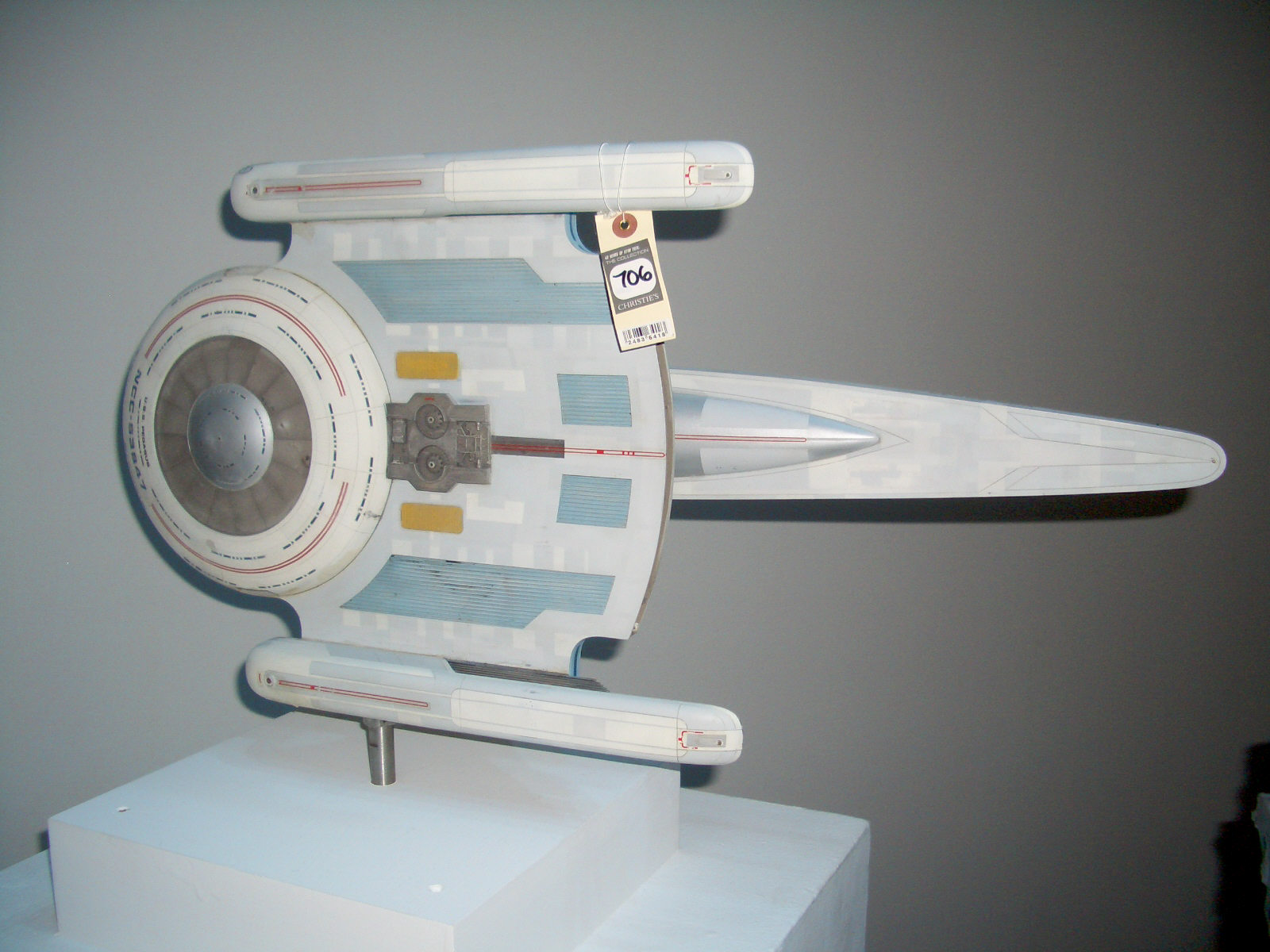
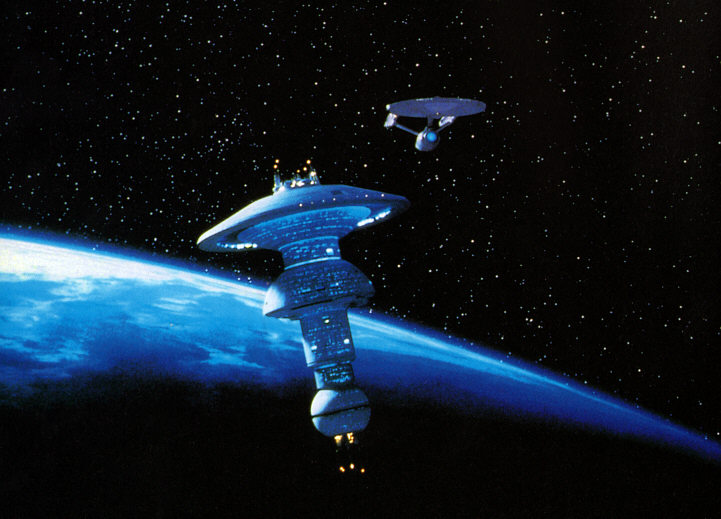
- Remarkable ships: Klingon Bird-of-Prey, Merchantman, Excelsior, Grissom and Spacedock, all new designs for this movie
Rating: 6
Star Trek IV: The Voyage Home
Synopsis


When Spock has almost completely recovered, Kirk decides that it is time for his crew to leave their exile on Vulcan. They take the captured Bird-of-Prey they named "H.M.S. Bounty" back to Earth when an alien probe threatens the planet by disabling all power systems. Spock finds out that the probe is on the search for traces of the now extinct humpback whales. In order to provide the probe with an answer, the crew travels to the late 20th century and find two such whales in the Cetacean Institute in Sausalito. After some problems with 20th century customs and technology, they manage to take the whales with them, together with biologist Gillian Taylor, who insists on staying aboard. Back in the 23rd century, all charges against Kirk except for noncompliance with his orders are dropped. Reduced to the rank of captain, he takes command of the new Enterprise NCC-1701-A.
Review
The 1980s were a very special decade for movies. It seems that no adventure film (such as "Raiders of the Lost Ark"), no action film (such as "Beverly Hills Cop") and no science fiction film (such as "Back to the Future") could do without a fair amount of sometimes unwarranted comedy and without being branded with cool catchphrases. "Star Trek: The Voyage Home" followed the general trend in the movie industry and was made into the probably funniest installment of Star Trek - movies and episodes combined. There are countless humorous situations and quotes in ST:TVH, such as Spock's silencing of the punk in the bus, Kirk's remark that Spock has taken too much "LDS", Chekov's "nuclear wessels", Scotty's attempt to talk into the computer mouse and Chekov's rescue from the hospital. I think that the crew's sometimes more and sometimes less successful attempts to adapt to the weird culture of the 20th century are close to being in the focus, rather than their mission to save the whales. But I think the movie wants to and can still be taken seriously. This is also good in light of the environmental concern, and I am very pleased that people refer to ST:TVH as "the one where they save the whales" still today, rather than "the one where they stumble through 20th century San Francisco".
The high dose of humor, however, is part of the more general problem that ST:TVH does not continue at all in the vein of "The Wrath of Khan" and "The Search for Spock". It does not work as the third part of the trilogy. The two previous movies shared a common theme. But with the Genesis project being history, just like the planet of the same name and the Enterprise, and with the crew being in the 20th century for almost the complete movie, ST:TVH opens a whole new chapter. In addition, there is a strong contrast between James Horner's "humming space violin" score for "The Wrath of Khan" and "The Search for Spock" and the "American march music" by Leonard Rosenman for ST:TVH.
Overall, ST:TVH has relatively little Star Trek in it. It is pleasant that for once a Star Trek movie can do without a villain (although the worst offenders don't even exist at the time) and it is good to see that a Star Trek story does not have to take place in space and does not need many science fiction elements. Still, I would have hoped for a bit more of science fiction in it besides the whale probe (basically a reissue of V'ger from "The Motion Picture") and the time travel (that is fraught with problems). Perhaps the crew could have departed to the 20th century a bit later, or could have returned somewhat sooner? Regarding the fact that the crew should be be accustomed with time travel and its often catastrophic consequences by now, they are all extremely careless about their actions in the past. What are they thinking when they give away the formula for "transparent aluminium" or take Gillian Taylor with them?
Still, I have to say that I enjoy the movie every time I see it (it must have been like over 20 times by now, perhaps more often than any other Trek movie). While there is not much Star Trek in the sense of space exploration in ST:TVH, it does a great job reaffirming the friendship that exists between all members of Kirk's bridge crew. I like that everyone of the main TOS cast is allowed to contribute much more than an occasional "Yes, Captain" to the story. Still, there is a shortcoming in the movie because it lacks real conflicts among the characters and because it has comparably few discussions on ethics, despite its theme. Fortunately there are the comments on the whale hunt and Spock's human(e) stance that Chekov should be rescued because 20th century medicine can't help him. I actually like Spock much more in this movie than Kirk. It may have to do with the fact that Leonard Nimoy was the director, though. ;-)
Annotations
- Nitpicking:
- The Federation Council is much more than just cowardly polite to the Klingon ambassador with his absurd claims and overt insults. Never once his speech is interrupted by anyone of the dozens of attendees. Even worse, the Council seems to be opposed to Sarek's statements about "Klingon justice". We can't actually understand any words, but instead of applause or only silent approval for his correct remark that the Klingons murdered the crew of the Grissom they instantly engage in a chaotic debate whereupon the President has to call for silence.
- The size of the very same Klingon Bird-of-Prey, the HMS Bounty, is subject to vary considerably, not even relative to "Star Trek III". At the beginning of "Star Trek IV", on Vulcan, the ship is barely 50m long, whereas it grows to some 200m width compared to the whaling ship in the end.
- It may seem like a minor point, but isn't it incredibly ironical that there are glass windows in Starfleet Headquarters? One of them is shattered just while Kirk is speaking over the comm system. It is a plain glass window, no security glass, no plexiglass, let alone transparent aluminum.
- Spock speaks of capturing high-energy photons (apparently gamma radiation) from a nuclear fission reactor to recrystallize the dilithium crystals. It is, however, paradoxical to store photons because they only exist when energy is released as radiation. Spock explains that he will construct a special device for that purpose, but explicitly to contain them because of their "toxic" nature, not to preserve them in the first place.
- Considering that the Cetacean Institute can't afford feeding the whales any longer, why is it that millions of dollars are available to fly the George and Gracie to Alaska in a specially modified 747? At least that's what Gillian tells Kirk. With at least four times of loading and unloading them, wouldn't it be an extremely risky procedure as well? Wouldn't it be a lot easier to use a simple barge to take them to the open sea?
- More inconsistencies on a separate page.
- Remarkable dialogues:
- "Don't tell me you're from outer space." - "No, I'm from Iowa. I only work in outer space." (Gillian and Kirk)
- "Dammit, do you want an acute case on your hands? This woman has immediate post-prandial, upper-abdominal distension." - "What did you say she's got?" - "Cramps." (McCoy and Kirk)
- Remarkable quotes:
- "Remember this well. There shall be no peace as long as Kirk lives." (Klingon Ambassador)
- "I don't know if you've got the whole picture, but he's not exactly working on all thrusters." (McCoy)
- "There are other forms of intelligence on Earth, Doctor. Only human arrogance would assume the message must be meant for man." (Spock)
- "May fortune favor the foolish." (Kirk)
- "Double dumb-ass on you." (Kirk)
- "My god, man! Drilling holes in his head's not the answer! The artery must be repaired! Now put away your butcher knives and let me save this patient before it's too late!" (McCoy)
Rating: 7
Star Trek V: The Final Frontier
Synopsis


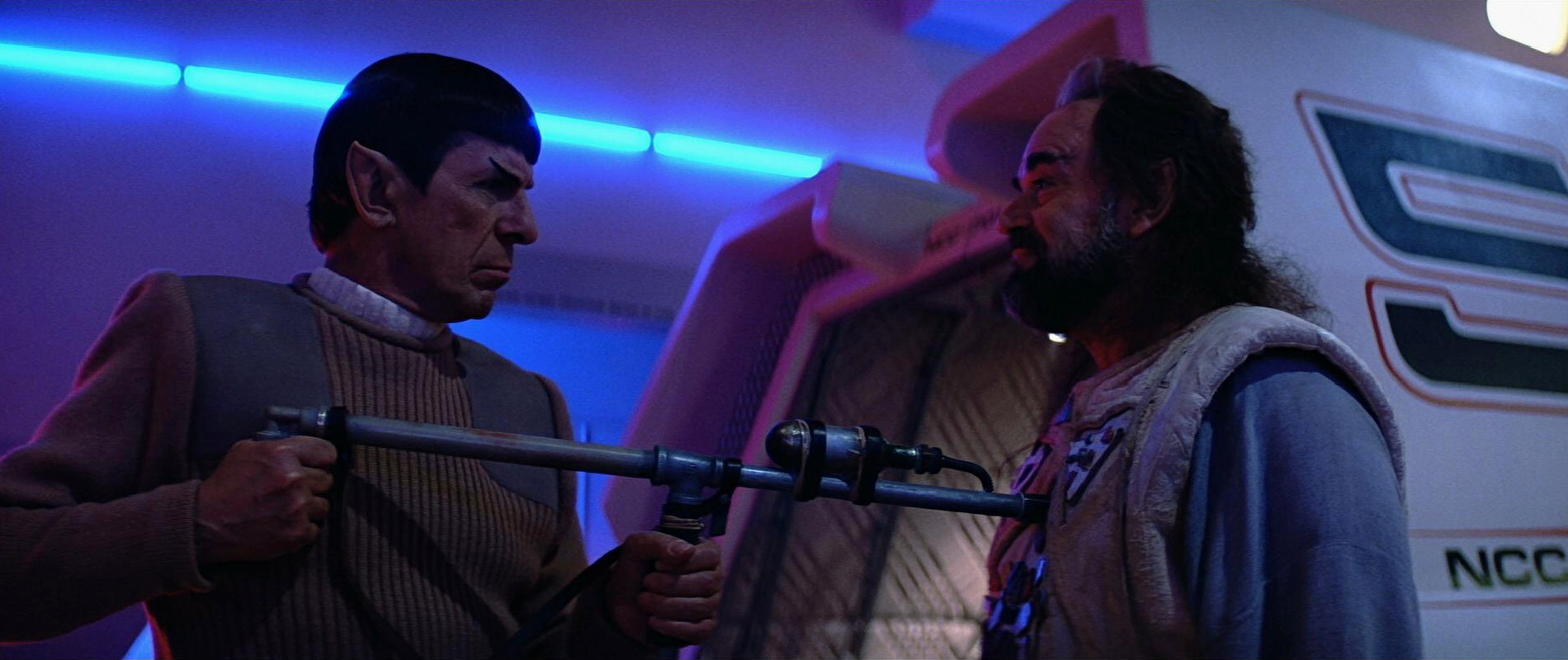
A Vulcan named Sybok, who embraces emotions rather than logic, gathers followers for a crusade on the desert planet Nimbus III and occupies the planet capital, "Paradise City". Among his hostages are the three ambassadors of the Federation, the Klingons and the Romulans. When a barely operational Enterprise-A comes to the rescue, Sybok seizes control of the ship too. Spock has to confess to Kirk that the rogue Vulcan is his half-brother. With his telepathic abilities Sybok influences the crew except for Kirk, Spock and McCoy to head for the center of the galaxy where he believes to find the mystical planet Sha-Ka-Ree. At their arrival the landing party is received by an eccentric being that claims to be "God" and demands to be brought aboard the starship to be able to spread his "wisdom". Sybok dies when he mind-melds with the creature to save the rest of the landing party. With help from the Klingons, "God" is eventually destroyed.
Review
Fans as well as occasional viewers almost unanimously rate "Star Trek: The Final Frontier" as the worst of all Trek movies, and with good reasons. No other movie is so sloppily written and directed, no other movie comes with so much plain silliness. Kirk's self-aggrandizing rock-climbing, Uhura's nude(?) fan dance, Spock riding a blue unicorn, Kirk hugging Spock in the presence of the Klingons, Spock's misconception of "marshmellons", the three heroes singing at the campfire. Errors abound, such as Kirk's fall that Spock stops immediately a few centimeters above the ground, the "Deck 78" on the Enterprise, the impossible travel to the center of the galaxy or the way that Sybok seizes control of the Enterprise without meeting any resistance. It is quite obvious that those who were responsible for the movie were not willing to do their homework, because all the aforementioned issues could have been avoided or considerably improved with little to no effort. However, my impression is that many of the errors were even introduced deliberately, just for a bit more of a dramatic impact. I also think that most of what turned out silly was originally intended by William Shatner as a humorous tidbit, in an attempt to repeat Nimoy's success with ST:TVH. But Shatner should have left the writing and directing to people who know it better.
To make it worse, it is not only due to these details that the movie is ruined. The idea of seeking God is intelligent in essence, and it could have been an exciting tightrope walk between science and religion. However, already the basic plot of the emotional Vulcan sect leader, who happens to be Spock's brother, is ridiculous. The strange horde that takes the village and then the ship hostage without running into real resistance does the rest to render the story utterly incredible.
Laurence Luckinbill still makes the best of his role. He is credible as a "soul healer", even when he mind-melds with "God" (I somehow like that scene in which Sybok redeems himself and sacrifices his life for his people - and for his dream). His brainwashed followers, on the other hand, especially the three ambassadors, are just awful caricatures and better extras as the course of the story is concerned. On a final positive notes, despite the corny campfire scene, I like how this movie spotlights the friendship among the Enterprise crew, and especially among Kirk, Spock and McCoy.
Annotations
- Nitpicking:
- When Kirk plunges down the rock, we can already see him a few meters above the ground (between the trees) in one take, then Spock eventually stretches out his hand to grab Kirk, then we see Kirk fall just one more meter in a close take and stop immediately above the ground thanks to (presumably) Spock suddenly reversing the direction of the rockets. Surely Spock must have caught him several seconds earlier and then slowly reversed the direction of of the engines for both of them to survive. Even if the scene was already shot to be so impossibly dramatic, skilled editing of the available shots could have made it look half-way credible.
- Spock toasts, as he says, a "marshmellon". Does he make a strange joke that Kirk and McCoy don't understand? Or doesn't he of all people remember the correct spelling he found in the library computer? Does he really think a marshmallow is some sort of fruit?
- Sending Kirk to handle the situation on Nimbus III is the worst possible choice, as McCoy correctly remarks, "The Klingons don't exactly like you." So if anyone is supposed to deal with trigger-happy Klingons in a diplomatic fashion, it could be least of all Kirk. His mere name would make the Klingons warlike - which is exactly what happens. Only in "Star Trek VI", when the Klingons seek peace, the situation will be different.
- Admiral Bennett said, "Assess the situation and avoid a confrontation if possible". Captain Kirk acts against his explicit orders when he attacks the camp before even trying to establish contact with Sybok. Is that what he understands as "assessing the situation"?
- The by far silliest logical mistake of the movie and probably of all Trek movies is when Spock points the weapon at Sybok after the crash landing of the shuttle. Kirk frantically screams "Shoot him!" But even if the weapon doesn't have a stun setting, Spock would still not have to let Sybok take it. He could throw it away, he could use it to hit Sybok, he could simply keep it in his hands until support arrives to apprehend the rogue Vulcan. So why does he choose to give the weapon to his brother? The only explanation that doesn't let Spock appear as a complete moron is that Sybok's mental powers had some effect on him. In this case, however, Spock's outrageously lame excuse that he couldn't shoot his brother would be dishonest for he wouldn't admit that he didn't act on his own.
- Deck 78. Oh my. They pass the decks: 35, 52, 63, 64, 63, 64, 65, 52, 77, 78. In that order.
- More inconsistencies on a separate page.
- Remarkable quotes:
- "Concentration is vital. You must be one with the rock." (Spock to Kirk)
- "Be one with the horse!" (Kirk to Spock)
- "What does God need with a starship?" (Kirk)
- "Please, Captain. Not in front of the Klingons." (Spock)
- Remarkably cheesy performance: The Three Tenors and "Row Your Boat"
- Remarkable trash scenery: Paradise City, which is more like an end-of-times settlement than something that was ever meant to be have a bright future
- Remarkable prop: the "marshmellon" dispenser
Rating: 1
Star Trek VI: The Undiscovered Country
Synopsis


After the disastrous explosion of their moon Praxis that has led to an ecological disaster on their homeworld, the Klingons offer peace talks to the Federation. The Enterprise welcomes a Klingon delegation aboard, but after their return the Klingon ship is fired upon and Chancellor Gorkon is shot by assassins. McCoy attempts to help the dying chancellor in vain. He and Kirk are arrested and convicted by the Klingons. After the Enterprise has freed them from the penal colony on Rura Penthe, they head for the Khitomer peace conference. Here, with the help of the USS Excelsior and Capt. Sulu, they defeat the Bird-of-Prey of the treacherous General Chang and save the life of the Federation President, who was the next on the assassination list. It turns out that it was a joined conspiracy of Klingon and Starfleet officers together with the Romulan ambassador, who all wanted the cold war to continue.
Review
The franchise was very fortunate that "Star Trek: The Undiscovered Country", the last movie with the complete TOS cast, was produced at all, and so soon after the financial and reputational disaster of "The Final Frontier". The new film was co-written and directed by Nicholas Meyer, who already directed the fan favorite "The Wrath of Khan". Actually, it seems that most of the fans who rank "The Wrath of Khan" as the best Star Trek movie have "The Undiscovered Country" as the runner-up.
The idea to include a real-world development, namely the political changes in the former USSR largely succeeds in "The Undiscovered Country", especially since the Klingons were always intended to be the equivalent of the Soviets in space and because it had to be clarified why the Federation and the Klingons are allies in the time of TNG. "The Undiscovered Country" is a film that fulfills these expectations, but it lacks unique moments to remember. The beginning is quite promising, but the suspense dwindles after the Kronos One has been attacked. The movie becomes rather boring after Kirk and McCoy have been convicted and taken to Rura Penthe, although probably the contrary was intended. "The Undiscovered Country" gets thrilling again as late as in the space battle at the very end. Still, I dig the detective story (something which is not very often a topic in Star Trek) and the revelation that it's a plot by both Federation and Klingons. General Chang, on the other hand, is given no chance to become a worthy opponent. He has neither the time nor the potential for it, and his awful Shakespeare quoting doesn't help him either. The other conspirators don't even show up until the very end.
I overall dislike the dialogues in this film. They are either overblown (such as Kirk's "Let them die!" at the conference in the Starfleet HQ and his Hitler comparison during the dinner), or just silly (Chekov: "Guess who's coming for dinner." - a line that was originally written for Uhura). I can understand Nichelle Nichols well that she refused to say this and another line that she deemed racist. Overall, I think the dialogues are the second worst of all Trek movies after "The Final Frontier". Only a few tips of the hat are really fitting, like Chang's line "Don't wait for the translation!", which is exactly what the UN delegate of the USA demanded from the Soviet delegate during the Cuba Crisis.
Annotations
- Nitpicking:
- The subspace shockwave emerging from the Klingon moon Praxis has to propagate at FTL speed in order to affect the USS Excelsior that is light years away from the Klingon homeworld. There is a lot of artistic license in the depiction of the phenomenon. The most blatant error is that we see a flash of light and even hear the bang before the wave even arrives at the camera position.
- When he enters the conference room, McCoy wonders: "If we are all here, where is Sulu?" Why in the world should Sulu have to attend a meeting with the current Enterprise crew? He has been on the Excelsior for three years, as he notes in his captain's log.
- Spock says that the explosion of Praxis caused "a deadly pollution of their ozone". He either meant that the ozone (the chemical compound) was depleted because it was swept away by the blast or reacted with something else, or that the ozone layer (a region of their atmosphere) was polluted with some sort of particles. But there is no way that the ozone could be "polluted". To add to the confusion, he says that the supply of *oxygen* on the Klingon homeworld will be depleted within 50 years. At least this is something indirectly related to the ozone layer depletion, as the increased ultraviolet radiation could kill plants on a large scale, which would indeed lead to a lower oxygen production.
- The Klingon blood inconsistency is the most prominent problem of the movie. The blood is pink here, while it is dark red on every other occasion in Star Trek.
- We can see how Spock slaps the viridium patch on Kirk's back just before Kirk and McCoy enter the turbolift to beam over to Gorkon's ship. This raises a lot of questions. First of all, did Spock expect the captain or anyone else to be captured, or is he routinely carrying along a 23rd century "first-aid kit" with viridium patches? Secondly, why did Kirk notice that he was carrying that patch but not McCoy? The doctor's face was only centimeters behind Kirk's shoulder in the turbolift. If it is a standard procedure and a standard device, he shouldn't have been surprised on Rura Penthe. Also, the Klingons clearly don't even superficially investigate their prisoner's clothes. Kirk is wearing the patch all the time, even during the trial (which should also have given McCoy a lot more time to recognize it).
- What the heck is Romulan Ambassador Nanclus doing in a meeting of the Klingon Ambassador with the Federation President and Sarek? He has absolutely no business in the bilateral Klingon-Federation matters that are being discussed. He obviously isn't acting as a mediator, but is representing the Romulan Government as he states himself.
- The senior officers' approach to look up Klingon words in a book and to try to pronounce them half-way correctly is not just awkward but plain stupid. If the Klingons would recognize the universal translator, as Chekov says, why doesn't Uhura simply use the device to create the translation offline, and then repeat the same sound to the Klingons?
- The Federation President speaks of the "total evacuation of Qo'noS". As far as we know, this never becomes reality, or everything that happens on Qo'noS since that time must take place on a different planet that is given the same name.
- Although it sounds like the Enterprise-A is going to be decommissioned, Kirk's final log entry in the movie is: "This ship, and her history, will shortly become the care of another crew". This refers to the Enterprise-D in a somewhat awkward figurative sense, rather than to the Enterprise-B.
- More inconsistencies on a separate page.
- Remarkable quotes:
- "There is an old Vulcan proverb: 'Only Nixon could go to China.'" (Spock)
- "I offer a toast. 'The undiscovered country.' The future." (Chancellor Gorkon)
- "What about that smell? You know only top-of-the-line models can even talk." (Enterprise crewman)
- "Perhaps you know Russian epic of Cinderella. If shoe fits, wear it." (Chekov)
- Remarkable fact: The same planet Khitomer will be the target of a Romulan sneak attack in the 24th century.
- Remarkable background fact: Lt. Valeris was originally intended to be Lt. Saavik, but fortunately it was decided that Saavik shouldn't be a traitor.
Rating: 6

Back to Star Trek Movies index