


Introduction to EAS
EAS in a NutshellMotivationSite Standards & Compatibility
"Space - the Final Frontier. These are the voyages of the Starship Enterprise, its five-year mission to explore strange new worlds, to seek out new life and new civilizations, to boldly go where no man has gone before."
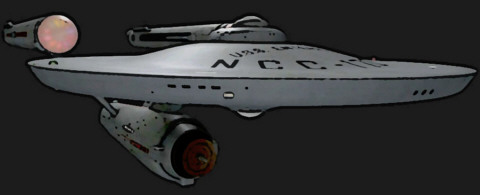
EAS in a Nutshell
 Ex Astris Scientia (EAS) is an unofficial, privately owned and strictly non-commercial website dedicated to the Star Trek science fiction franchise. It was created and is maintained by Dr. Bernd Schneider, an electrical engineer and long-time Star Trek fan based in Germany. Many of the detailed articles at EAS are the work of Jörg Hillebrand.
EAS focuses on the starships and future technology that appeared in the various TV series and movies, as well as on the discussion of artistic, political, social and philosophical aspects of Star Trek. The Starship Database, Starship Articles, Fleet Charts, Treknology Encyclopedia and the treatises on Time Travel, Investigations and Observations are the most comprehensive references of their kind available anywhere. They are considered by some fans as almost authoritative, although the conclusions put forward at EAS are in no way official.
 EAS is canon-based, meaning that only evidence that actually appeared on screen is taken into account, as opposed to games, novels or mere speculation. If in any way possible, updates and amendments of the facts and conclusions at EAS take place immediately whenever newly found canon evidence requires them. Minor maintenance of the site is performed almost every day. New content is added twice a week on average.
EAS includes episode reviews of all Star Trek series and movies, galleries of starships and other pictures, many of which are not available in this form elsewhere. Among the numerous smaller sections of the site the continually updated Links page with 200 hand-picked Star Trek sites is of particular interest, as well as the Ex Astris Excellentia Award (EAE), the only renowned award for Trek websites still in existence. EAS itself received a large number of distinctions too.
 The site was launched on January 21st, 1998, at that time located on the server of the University of Siegen. Since July 2000 the domain is www.ex-astris-scientia.org. The language of EAS is English. A small number of articles are available in German. However, an EAS version in German or other translations of the site are not planned. EAS is created with static and completely handmade HTML in Notepad++, supported by a framework of numerous customized or custom-made JS, CGI and PHP scripts for maintenance or for interactive functions.
Commenting is possible via Disqus. An RSS news feed is available. Furthermore, EAS maintains a Facebook and a Twitter profile.
 EAS is 100% free of any form of advertising or sponsoring. Furthermore, a strict ethical code enforced at EAS includes a ban on scripts that may run unwanted code on the visitor side, that create unnecessary cookies or that contain trackers. EAS does not show any social media widgets and does not use Google Analytics for that matter. If in any way possible and practical, external scripts are off by default to protect user privacy.
 This website is made by and for lifeforms - not for search engines, not for social media integration, not for AI tools. It offers deep dives into the world of Star Trek, rather than random bits and pieces. It is a desktop-first website with only limited optimization for mobile devices.
With roughly 7000 unique visitors every day and 200 gigabytes transfer volume per month EAS is among the world's top Star Trek websites. The site used to rank between #3 and #7 in the Star Trek category at Alexa and is #4 at Feedly, surpassed only by news and community sites. EAS is the biggest and most frequented ad- and sponsoring-free Trek site to exist and the arguably best known Trek site maintained by a single individual.
EAS spawned several fan projects that would not fit into the strictly canon nature of the site and were outsourced to their own websites with distinct names and layouts, namely the Advanced Starship Design Bureau (ASDB), The Starfleet Museum, the Journal of Applied Treknology (JoAT), Star Trek Fan Fiction and Canon Fodder. All these sites present the works of various artists and authors. They reside on the same server as the main site and are taken care of by Bernd Schneider.
Motivation
It was in 1973 when I made first contact with Star Trek: The Original Series. I was still a child and I didn't get the whole picture of what was going on in the show, but I already recognized some difference between Star Trek and everything else on TV. It must have been the very special, often surrealistic atmosphere - although I would have chosen different words - and the fact that future technology was credibly presented. TOS epitomized the vision of scientific miracles and of a bright future more than any other fiction. Contrary to common belief, I don't think that the series has lost much of its credibility since. I was lucky that my father was not so much into football (soccer), otherwise I would have faced the same dilemma that many German families had on Saturday afternoons when Star Trek aired on the second channel and the sports news on the first one. There was no chance yet for Star Trek to become really popular. Another problem, especially in Germany, was and still is that the episodes are shown exclusively in a dubbed version. Translation errors and unintentional humor included. Especially TOS was given a silly undertone that can't be found in the English version.
I didn't see the Star Trek movies of the 70's and 80's in the theater, perhaps because there was hardly any media coverage. The first time that I watched Star Trek again after it hadn't been repeated on TV for almost a decade was in 1988. It was also the first time that the complete series aired in Germany (save "Patterns of Force"), and I didn't miss a single episode. Yes, there were really bad ones, but even the worst episodes became pieces of the entirety, the Star Trek Universe.
TNG marked a new beginning, and I loved it from the very first day. The series superficially excelled because of the advances in both in-universe technology and real-world visuals. But TNG was also special because it had both the pleasant atmosphere with carpeted floor and, on the other hand, still the daring "where no one has gone before" feel. And increasingly captivating stories. And Jean-Luc Picard, the best of all captains.
I admit I didn't care much for DS9 in the beginning, which is mostly because the stories of the first season were so darn boring. Subsequently, as it developed and unfolded its story arcs, I became very fond of it. DS9 was the series that perfectly combined the bright and hilarious with the dark and threatening, and so were the characters: always good for a surprise. The series created new facets of Star Trek while still remaining true to the roots. The same goes for Voyager. However, unlike DS9 this series hit me like a lightning. Ask my pals Thorsten and Steffi about my facial expression when I saw the starship's engines fold upward for the first time. It was the series of "Wow!" effects, which doesn't mean that profound stories were missing. They were rather the rule than the exception. Sadly many critics probably failed to see them behind the outstanding visual effects. Star Trek Enterprise continued where Voyager ended. Only set 200 years too early. The series lived up to its premise as late as in the final season, arguably one of the best seasons of all Trek series.
I enjoyed J.J. Abrams's reboot, because it brought back the excitement. But the popcorn movies with their focus on mindless action, gaping plot holes, miscarried homages and lack of a positive vision failed as prequels to the Star Trek I love. The new movies compare to the old Trek like one-night stands to a decade-long relationship.
Star Trek Discovery fares even worse. The series doesn't explore strange new worlds; it merely reimagines the existing ones. It is shiny in design but dull in terms of the stories. Discovery throws away essential assets of the franchise, not only on the visual side, while it cherry-picks references to the old Star Trek as if fan service were the decisive quality mark. Star Trek Picard brings back at least part of the spirit of the old Star Trek and doesn't deny its look. Strange New Worlds inherits most creative decisions from Discovery and comes with an attitude that TOS would have to be "fixed". Yet it may be the Trekkiest show in 17 years. But if you ask me which show among the recent ones is my favorite, the answer will be Lower Decks!
What do I like most about Star Trek (at least about the classic pre-Abrams and pre-Discovery Trek)? Well, I could give you the brief and obvious answer: starships! I certainly have more sophisticated motives as well, such as Gene Roddenberry's commonly quoted vision of a better future for humankind. While both answers are true, rather than single aspects I usually consider the entirety, the consistency that keeps Star Trek together and that distinguishes it from other fiction. Star Trek has a philosophy that I continue to uphold despite all the recent efforts by the people in charge to "reimagine" or redefine it. All this makes up the essence of Star Trek, at least in my view.
Why did I create this website? The answer may surprise, but I did it all for myself in the first place. I have always loved to categorize and evaluate things, and this is my approach to Star Trek likewise. After the fun of watching comes the fun of analyzing. So this website is more or less my personal compendium of Star Trek, as far as I have the time to and feel like adding something. Well, it is often Jörg Hillebrand who has to push me to take on a new project. There are many other visitors who give me feedback, be it praise or criticism, or provide me with valuable information and suggestions. I maintain regular contact with several of them, and a few of them I can even call my friends. I think this alone was worth all the efforts putting up this site - as an incentive for discussions about our favorite science fiction.
Make it so!
Bernd Schneider
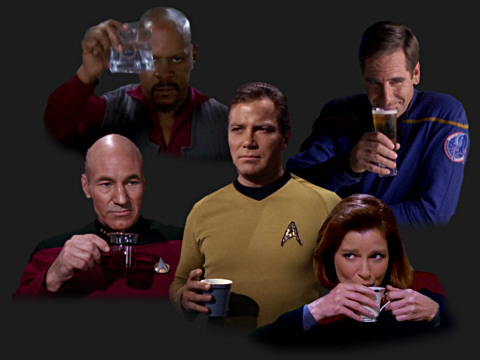
Site Standards & Compatibility
Current standards & legacy constraints
I originally built this site with Microsoft Frontpage on a Pentium I 100MHz with 32MB RAM and 2MB graphics board and for Netscape 3. That was in 1998, years before CSS and CMS became commonplace and a full decade before social media and smartphones even existed. I have gradually modernized the code, but full adoption of current best practices, such as semantic HTML5 structure and responsive layout architecture, is not achievable. EAS still relies on legacy layouts, and while I value clean code, content has to take priority over structural optimization. At the same time, the site avoids many typical legacy issues, such as deprecated tags or blocking scripts.
Full compliance with modern standards would require a total rebuild and a CMS migration, both of which would involve an extreme amount of manual work. I prefer to invest that time into preserving and expanding the content.
Mobile compatibility
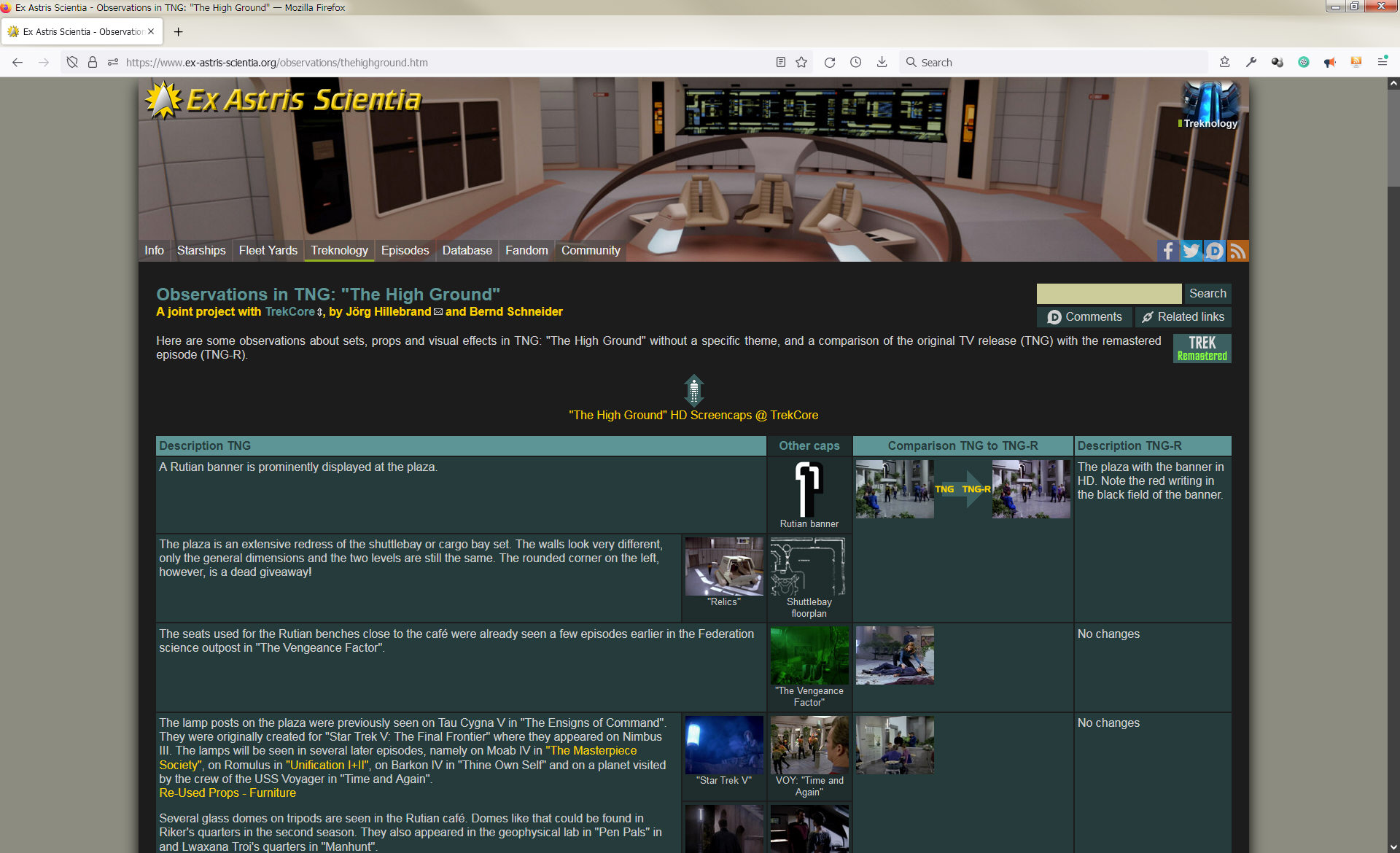
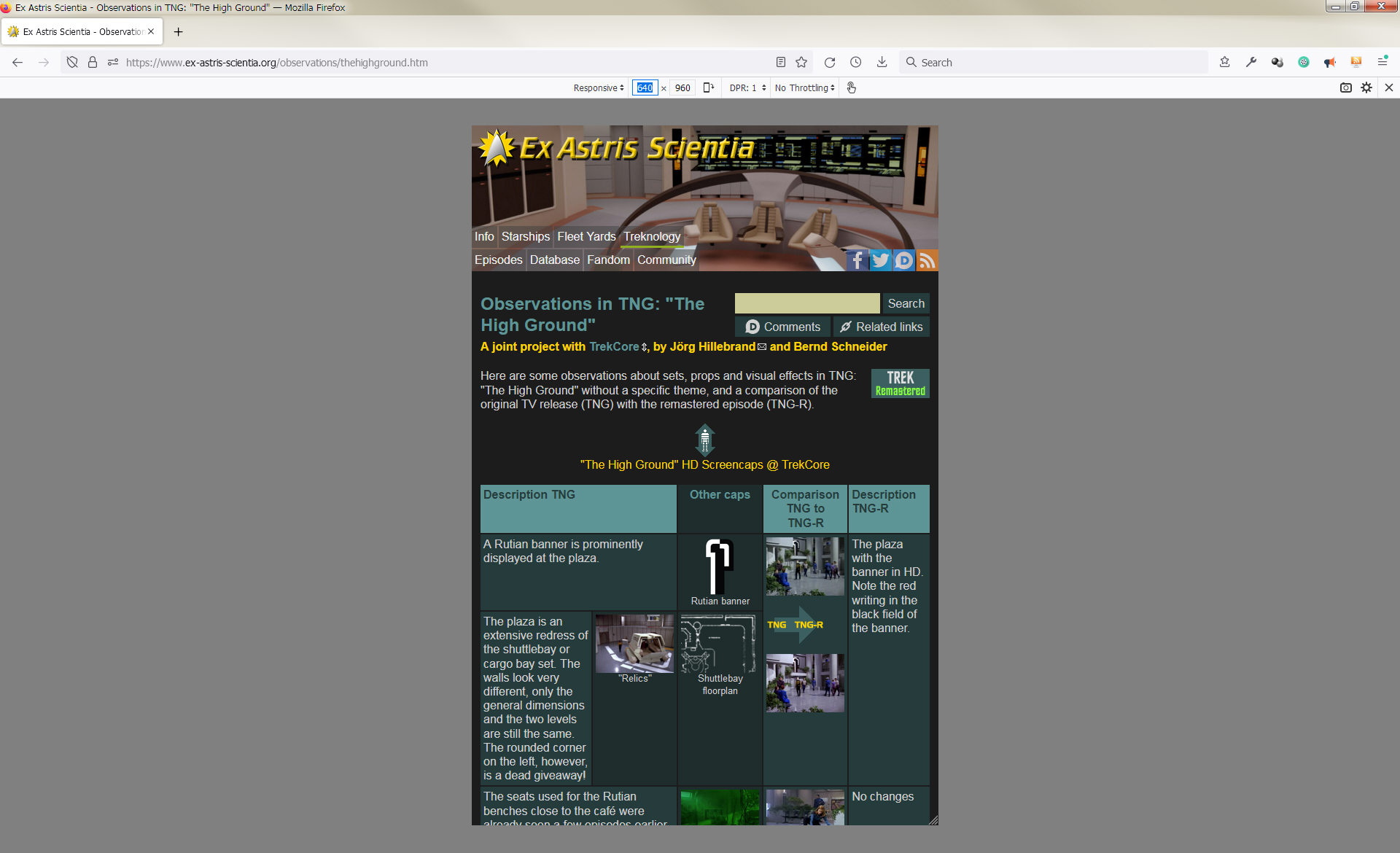
This is a desktop-first website with limited responsiveness. The articles are long, detailed and graphic-heavy, and they display best at 1024×768 or higher, though most pages remain usable at 800×600 and on mobile devices with a defined viewport of 640 pixels. Some limitations remain unavoidable: HTML5 audio controls render oversized on Safari/iOS and a number of full-width tables overflow on small screens. Converting hundreds of individually formatted tables into mobile-friendly layouts would require thousands of hours of manual editing. Breaking articles apart or shortening them for mobile would compromise the content, which is why this will never happen.
Accessibility
As the site predates present-day accessibility standards, it does not fully implement features like semantic headings, ARIA roles or consistent alt text. Images usually have captions placed next to them rather than inside alt attributes, which works for search engines but not so well for screen readers. Keyboard navigation and contrast ratios may also fall short of current expectations. Modern browsers compensate for many structural gaps, but users relying on assistive technologies may still encounter limitations.
Plug-ins and scripts
This site uses on-site JavaScript, mainly for convenience features. When scripts are completely disabled in your browser, a number of functions may not be available, but all content remains accessible.
External scripts are used to provide user-oriented functionality. No scripts are specifically included for tracking, analytics, advertising or similar purposes. Wherever technically possible, external scripts such as particularly Disqus are disabled by default and load only on request. External scripts are currently enabled by default only on video pages, since manual activation may disrupt the user experience.
The entire site remains fully functional with ad blockers such as uBlock Origin enabled, and I encourage their use. Only embedded YouTube videos may require adjusting your blocker settings.
See Also
EAS Site History - milestones of EAS and former layouts, reconstruction of original site (1998)
Site Projects - information about planned or ongoing projects (new content or technical improvements)


