


What is Canon?
The term "canon" is occasionally referred to by the people who work on Star Trek, but much more frequently by the fans and here at EAS. The usefulness of the canon is under permanent debate, as are the interpretations what has to be regarded as canonical and what not. This write-up seeks to clarify what canon actually means, why it exists, how we can handle moot cases and how the canon policy at EAS works.
Although the concepts are different (which becomes evident as soon as we're looking at more than one timeline), "canon" and "continuity" are often used interchangeably. Read also the separate article on The Continuities of Star Trek.
Definitions
General definition of canon
The word "canon" has more than one meaning in the English language. Several definitions can be found on the disambiguation page at Wikipedia (see the latest version of "Canon" at Wikipedia). The following two are relevant for the assessment of the Star Trek canon:
- "A list of books accepted by an ecclesiastic communion as authoritative or divinely inspired. The term was originally Christian, referring to books declared divinely inspired by the canons of Church councils..."
- "In fiction, the officially authorized interpretation of characters and events. In fandom, the term is often used to distinguish between 'canonical' accounts (i.e. those authorized by the copyright holder) and those of fan fiction, sometimes called fanon..."
As we can easily recognize, the word originally used for the "divinely inspired" literature of Christian churches has been adopted to denote the valid parts of a fiction. In this sense, canon stands for what we could find in the history books or other records of the fictional universe. Certainly the canonical fictional universe is not supposed to be as authoritative as the teachings of a church. Still, there are various similarities.
Side note "Canon" is a noun, the corresponding adjective being "canonical". Yet, it is common to use "canon" in the way of an adjective, such as in "It is canon that all Vulcans can meld their minds." This is how the word is customarily used here at EAS too.
Star Trek's canon
This is the practical explanation of canon as it could be found at the official Star Trek website until 2006:
"As a rule of thumb, the events that take place within the real action series and movies are canon, or official Star Trek facts. Story lines, characters, events, stardates, etc. that take place within the fictional novels, the Animated Series and the various comic lines are not canon.
There are only a couple of exceptions of this rule: the Jeri Taylor penned novels 'Mosaic' and 'Pathways'. Many of the events in these two novels feature background details of the main Star Trek: Voyager characters. (Note: There are a few details from an episode of the Animated Adventures that have entered into the Star Trek canon. The episode 'Yesteryear', written by D.C. Fontana, features some biographical background of Spock.)"
Many of these positions, especially those concerning TAS and Jeri Taylor's novels, sound like they were arbitrarily made up and are debatable, as will be pointed out later. But the key statement is that only "events within the real action series" are canon. At least that much is generally accepted. Irrespective of any concerns of how they could possibly fit together, this definition of canon encompasses the live action TV shows (TOS, TNG, DS9, Voyager, Enterprise, Discovery, Picard, Strange New Worlds) and the feature films (classic and Abramsverse), all in the versions in which they were shown on TV or in the theaters, respectively.
Side note The notion that any books could be canonical was contested by professional writers posting at TrekBBS. Paramount's policy that Jeri Taylor's novels should be canon was said to be non-existent and may have been made up just for the fans.
From 2006 to 2010, the following more elaborate explanation could be found at startrek.com:
"As a rule of thumb, the events that take place within the live-action episodes and movies are canon, or official Star Trek facts. Story lines, characters, events, stardates, etc. that take place within the fictional novels, video games, the Animated Series, and the various comic lines have traditionally not been considered part of the canon. But canon is not something set in stone; even events in some of the movies have been called into question as to whether they should be considered canon! Ultimately, the fans, the writers and the producers may all differ on what is considered canon and the very idea of what is canon has become more fluid, especially as there isn't a single voice or arbiter to decide. Star Trek creator Gene Roddenberry was accustomed to making statements about canon, but even he was known to change his mind.
In the publishing world, there used to be two exceptions to the novel rule: the Jeri Taylor-penned books 'Mosaic' and 'Pathways.' Many of the events in these two novels feature background details of the main Star Trek: Voyager characters and were to be considered as references by writers on the show. Now that the show is over, some of those events may never be incorporated into a live action format, so the question of whether details from these novels remain canon is open to interpretation.
With regard to the Animated Series, there are a few details from the episode 'Yesteryear,' written by D.C. Fontana, that reveal biographical background on Spock and planet Vulcan. Details from this episode have been successfully incorporated into the canon of Star Trek (such as in 'The Forge') and now that the Animated Series is out on DVD, we hope that even more can make its way in!"
Note that the revised definition is overall watered down. While the canonicity of some facts from the movies (obviously because of fan reactions to "Star Trek V") is suddenly questioned, TAS is proposed to become canon (following a fan vote at startrek.com). Another former article on the site confirms this intention, and the TAS DVD special features even assure the viewers of the full canonicity of the series. Something of further interest is the suggestion at startrek.com is that works such as novels or TAS may gradually become "more canon", as more of them is incorporated into a canon series. This practice may work out well for the people who produce Star Trek. In its ultimate consequence it would remove the need for them to care about canon at all. But it makes the decision if and where to draw a line increasingly complicated for the archivists and hence essentially for the fans.
Canon vs. official
In a simple approach it may seem that anything about the fictional Star Trek Universe that is officially released by Paramount/CBS should be automatically canonical. But the word "official" is used as an administrative or legal term, as opposed to "canon" as a purely fictional quality. The two are different. Whereas Paramount Pictures or CBS may *officially* endorse books or games of their licensees, this does not imply that these products are *canon* too. On the contrary, as will be explained further down, Paramount/CBS keeps licensed products strictly non-canon.
Non-canon
This is merely the negation of "canon". If only live action is to be taken into account, then Star Trek novels, no matter if written by licensed authors or by fans, are never canon. In order to avoid misunderstandings: The designation "non-canon" does not imply that they are badly written or that loyal fans should not read them. It just says that they are not a part of the canon Star Trek Universe and are therefore irrelevant in its assessment. All novels, comics, reference books, calendars, role playing games, computer games, fanfic websites, merchandising items and everything else dealing in any way with Star Trek is non-canon, regardless of its publisher or authorship.
Apocrypha
Fans occasionally refer to material whose canonicity is debatable as "apocryphal". Wikipedia (see the latest version of "Apocrypha" on their server) defines the term like this:
- "In Judeo-Christian theologies, apocrypha refers to religious Sacred text that have questionable authenticity or are otherwise disputed. When most in the Western world refer to the Apocrypha, they are typically referring to the 14 books excluded from Protestant Bibles..."
In Star Trek fandom, the term "apocryphal" represents any information that is not canon in a narrow sense, but is by some treated like, or accepted as, canon. This may include The Animated Series, the books by Jeri Taylor, selected information from any other novels, reference books, deleted scenes or behind-the-scenes information. However, accounts from the live series, which are canon by their very definition, shouldn't be declared "apocryphal" just because some doubt its canonicity - even if there was an according insinuation in the former FAQ at startrek.com.
Beta canon
In fandom, licensed Star Trek literature and games are sometimes referred to as "beta canon", most often in conjunction with TAS being fully canon. As the "apocryphal" category appears to become obsolete, the classification as beta canon establishes a new and somewhat more authoritative additional level between "canon" and "non-canon". In more recent years, writers working for the official productions have begun to include facts from beta canon into canon (or official) Trek, such as the species of Rok-Tahk, the Brikar.
Fanon
This word is obviously a portmanteau of "fandom" and "canon". Wikipedia (see the latest version of "Fanon" on their server) says about "fanon":
- "Fanon is a fact or ongoing situation in fan fiction stories related to a television program, book, movie, or video game that has been used so much by fan writers that it has been more or less established as having happened in the fictional world, but it has not actually been established as having happened on the show, book or movie itself. Fanon is a portmanteau word of fan and canon..."
So "fanon" denotes views, opinions and sometimes whole theories that are non-canon but widespread in fan fiction. Examples include minutiae like Uhura's first name Nyota, which was never mentioned on screen until 2009 when it finally became canon, or the notion that Romulans did not have warp drive in 2266, which is just a perpetuated misconception, as can be seen in the article about Warp Drive and Romulan History. More examples along these lines are listed on the page about False Canon.
Semi-/quasi-canon
These words are often used to denote material, which is either not canon in its entirety or whose canonicity remains debatable. The latter could be described as "apocryphal" too.
Anti-canon
Parts of fan fiction or of licensed literature that are in an irreconcilable contradiction to canon facts may be labeled "anti-canon". In some cases these works were written before changes or additions to the canon turned them anti-canon. However, there is nothing such as a protection for non-canon works that are retroactively invalidated.
Personal canon or "headcanon"
These terms can be found in social media, discussion forums or personal blogs. Many fans have decided to include additional works (such as TAS, novels or even fan fiction) to their so-called "headcanon", or they deny parts of the franchise their otherwise definite status as canon (like a few purists disregard Enterprise or even everything that came after TOS and the first six movies). A "headcanon" may be and is supposed to be more consistent than the official canon and usually overlaps with "fanon". Yet, owing to its arbitrary nature and limited validity a "headcanon" usually obstructs the assessment of canon material.
Expanded Universe
The expansions of the Star Trek canon in the form of novels and of Star Trek Online are sometimes referred to as "Expanded Universe", rather than as beta canon. However, unlike in the case of Star Wars, this is not an officially endorsed or coordinated concept in Star Trek. Overall, there have been increasing efforts to align licensed works with each other and with canon in more recent years, but they don't form a unified science fiction universe. So the term beta canon describes better how the novels and games relate to canon Trek.
Reasons
The reasons for the existence of an ecclesial canon are diverse. It is debatable whether it was created in the first place to defy "heretics" who might take away power and prosperity from the official church, or whether it was first of all a honest matter of faith. Regarding the Star Trek Universe, the canon has a relatively harmless impact on the lives of most fans and it certainly is not intended by Paramount/CBS to control the fans. Still, there are reasons for a canon of the Star Trek Universe.
Canon and continuity
As outlined in the article on the Realism of (Science) Fiction, Star Trek is (or at least, used to be for quite some time) a franchise with internal consistency, as opposed to shows that are rebooted (Battlestar Galactica) or that take pleasure in creating deliberate continuity errors (South Park). Yet, during the three seasons of The Original Series from 1966 to 1969, there was no obvious canon policy, just as there was no particular attention to inter-episode continuity either. But as the fictional universe kept growing, it was necessary to come up with rules what has to be taken into account by future writers (the canon), as well as with a collection of such canon data for reference (The Star Trek Encyclopedia and its forerunners that have existed behind the scenes).
Keeping looks and events in new episodes compliant with canon is a quality mark of the show, at least until the end of Star Trek Enterprise in 2005 and gradually since 2020 again.
Canon and creativity
Canon is sometimes seen as an obstacle to creativity, simply because not all real-world possibilities are allowed to be exploited in-universe. On the other hand, in a creative process canon boils down to a simple list of what has been shown or told before and what not. This is not really a creative limitation. On the contrary, knowledge of canon can help avoid rehashes of a previous story. Of course, there is always a risk that knowledgeable writers recycle plots just because they think it is a good idea to show familiar situations already established in the canon. Still, they better closely base their stories on definite canon events than just on general stereotypes.
The knowledge about canon may have a quite beneficial impact on storylines. A prominent example is DS9: "Trials and Tribble-ations" with its slavish adherence to the canon events of TOS: "The Trouble with Tribbles". Another one is the Vulcan arc of ENT: "The Forge", "The Awakening" and "Kir'Shara" that successfully removes a previous continuity error concerning Vulcan Mind Melds from canon. These episodes are commonly said to be among the most creative and most enticing installments of all Star Trek.
Canon and commerce
Star Trek takes place in many different forms, among which the TV series and movies are in the center of interest. In addition, Trek-themed novels, comics and computer games are available as well as typical merchandising items such as action figures, t-shirts and coffee mugs. Any company with the intention to sell anything with "Star Trek" printed on it needs a license from the brand owners Paramount Pictures and CBS Television. This franchise makes up a major part of the business.
Paramount and CBS give away the valuable name of Star Trek to various third-party products, and they have an interest that these products adhere to certain standards. But irrespective of their quality, these products are not supposed to tell stories that have an impact on the TV series or movies. The copyright owners want to maintain full control of their own creative base.
There is actually an even more important reason why Paramount and CBS do not want any licensed products, especially those of literary relevance (novels and games), to be canon. If Paramount or CBS decided to adopt anything that was not originally created by an employee but by a contractor, they might have to pay royalties for each and every mention of this character or concept! So the Kzinti species from The Animated Series (TAS: "The Slaver Weapon") never found its way into any of the live series. The episode involving the Kzinti was written by Larry Niven, based on one of his novels (The Soft Weapon). Niven was irritated when Dean Foster wrote the novelization of the episode instead of himself, although he contradicts the common rumor that he threatened legal actions against Paramount (interview at Trekplace). Nevertheless it seems that Paramount preemptively banned the Kzinti from canon Star Trek, as well they prohibited their use in licensed works in at least three cases (Kzinti at Memory Alpha). Still, it was planned to finally include them in the fifth season of Enterprise. Another prominent example is the character of T'Pol, who was named T'Pau in the draft of the series. But the producers cautiously changed it to T'Pol in order to avoid the due credit to the author of TOS: "Amok Time", Theodore Sturgeon, in every episode. T'Pau was eventually included in the Vulcan arc on Star Trek Enterprise, though.
Canon and practicability
Star Trek writers are expected to be creative and not perfect librarians (something that is largely left to the fans and particularly to Memory Alpha today after Richard Arnold and later the Okudas used to fill that role). With 600 hours of TV it is already extremely hard to come up with stories that are original and still not in contradiction to previous installments. Without the help of the Star Trek Encyclopedia and other reference works as well as of their colleagues and editors, writers would find themselves lost in a confusing maze of facts that must be taken into account. This would become many times as complicated if they additionally had to take into account all novels. All of them because where could a line be drawn? And what about the games? They establish many facts as well. At some point it wouldn't be possibly any longer to insert new data because the adventures would fill many lifetimes of characters or ships, with incalculable inconsistencies.
Canon and the fans
As already mentioned, the term "canon" shows up in fan circles a lot more frequently than on startrek.com or in official reference works. Even casual viewers, who may not be aware of the word "canon", care more about it than the studio could hope for. They notice goofs like the epitaph "James R. Kirk" because everyone knows that his true name is "James T. Kirk". They wonder if the contents of novels or comics may have any bearing on the TV series. They compare Star Trek with other franchises like Marvel or DC Comics where the establishment of a credible (non-multiverse) canon is practically impossible because of lacking continuity. In this regard, the canon policy gives the fans something to chew on. It allows to limit discussions among fans to a reasonable common ground, and it ultimately enables the setup of websites like Memory Alpha, which would be a bottomless pit without the canon foundation, and of EAS, which would become utterly pointless if everything in Trek was "true". In this sense, the canon allows Star Trek to earn a "meta quality" when fans take care of episodes that the production staff has long finished.
Interpretations
As already mentioned in the introductory note, the criteria for what type of evidence is canon under which preconditions are under permanent discussion. Moreover, Gene Roddenberry and his successors are said to have included additional material to the canon, as well as they purportedly removed some of the live action from the canon. It will be discussed in the following whether the material in question should be acknowledged as canon, and whether the said exceptions are useful. But most notably, new rules are required for the alternate universe movies produced by J.J. Abrams (since 2009), for the e re-imagined universe of Star Trek Discovery (since 2017), as well as for old and newly produced animated Star Trek.
The views in this section reflect the canon policy at EAS; other fan-made websites may arrive at slightly different conclusions, considering that the Star Trek Universe has become very complicated, contradictory and controversial in more recent years.
Novels and games
Only televised Star Trek is canon. This explicitly excludes books, and above all the myriad of novels based on Star Trek. None of them are canon in the view of Paramount/CBS, although many of them would fit into the timeline and would be largely free of anti-canon notions. The above mentioned royalty issue forbids (or makes it unlikely) that characters established in the books find their way into canon Trek. The same applies to all Trek-themed games and other printed or digital merchandise.
 There can't be any exception along the lines "But these are soooo popular" or "She is such an excellent writer" or "He has been working on the series for years". Sorry, but any discussion of canon facts at EAS is strictly off-limits for material from novels and games. I also don't consider to introduce anything like an acknowledged "beta canon" level at EAS.
Novels based on movies
The circumstances seem to be different if a novel is directly based on a feature film, written by the same author and usually more comprehensive than the movie. One prime example is the novelization of "Star Trek: The Motion Picture" by Gene Roddenberry that adds many facts and aspects that can't be found in the movie. If much of the book's content is canon because it describes the events on the screen, shouldn't the rest be canon too?
Novelizations are a different format than movies; they leave possible additional facts to our imagination. Here we can and we should draw a line because the canon would become incoherent if events on screen and in print were supposed to be somehow combined. Novelizations are disregarded at EAS.Novels by Jeri Taylor
The two novels Mosaic and Pathways were explicitly mentioned on the official Star Trek website to be theoretically canon, the reason being that Jeri Taylor, at that time co-producer of the series, added essential background information on the Voyager main characters. But can this statement be maintained, considering that Voyager writers have been ignoring the novels all along? If they should have looked up facts there when writing episodes but actually didn't do it, the canonicity of her two books is at most theoretical, and some smaller parts may be even anti-canon.
The two books are well-written and might deserve to be canon, but seeing how the Voyager creative staff have been ignoring them, EAS is not bound to their facts either. The FAQ (until 2010) at the official website confirms my stance that even a theoretical canonicity of the two novels is pointless as long as there are no interlinks with canon Trek.Audio productions
The audio drama Star Trek Picard: No Man's Land was released by Simon & Schuster Audio in 2022 and has arguably the same status as any licensed novel or audio book. The situation is somewhat different with the audio drama series Star Trek: Khan that was produced by CBS Studios under the supervision of Alex Kurtzman. As such, it is an official product. On the other hand, exclusively TV shows were considered canon so far. Kirsten Beyer in an interview with Trekmovie.com: "There is nobody who comes along and like waves a scepter and dubs a thing 'canon.' What I can tell you is that for the people currently working on Star Trek, [Star Trek: Khan] will be treated as canon, meaning it will not be overwritten, contradicted. And it will be -when possible- incorporated into future storytelling."
I may decide to include Star Trek: Khan by referencing the series where useful. This may not apply to future audio productions, as I firmly believe in the necessity of visual canon. I deliberately placed my review of the series in the "Books & Audio" section because it is a different kettle of fish than the TV series and movies.

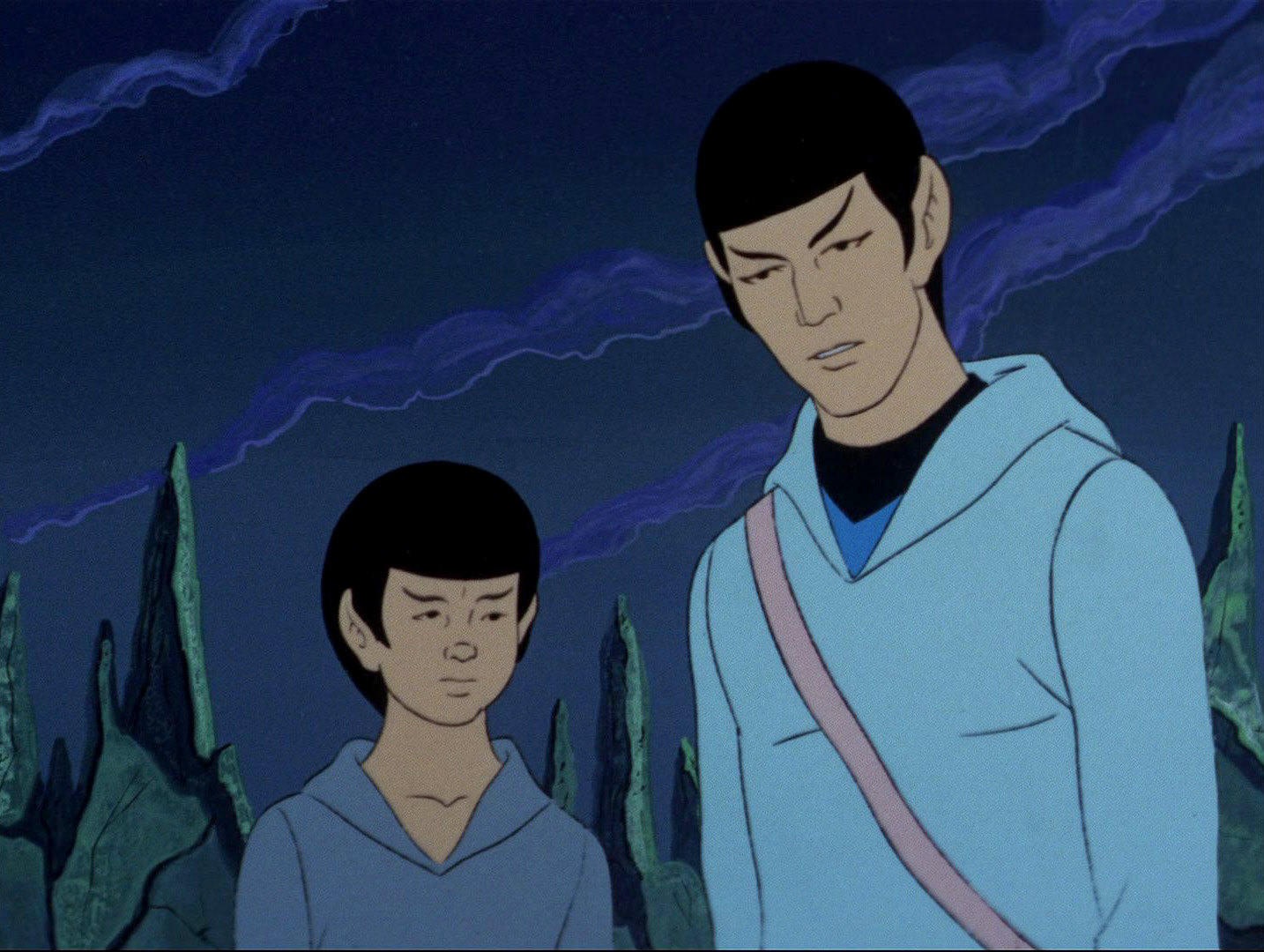
Star Trek: The Animated Series
Gene Roddenberry is said to have decanonized TAS, but this is uncertain. The official website previously stated that it is non-canon, but without giving reasons. The Star Trek Encyclopedia and all other official manuals written since the late 1980s (since the canon officially exists) are without references from The Animated Series. Nonetheless TAS may be treated as canon according to the TAS DVD and the official site (until 2010), at least partly because of a fan vote at startrek.com. Yet, the official website also used to state that the canonicity of TAS, even if it is earned effortlessly, must be gradually confirmed by referring to events from TAS in future incarnations of Star Trek.
 EAS always strictly complied with the studio's stance that TAS was non-canon, and I'm not going to change that without a really good reason. TAS has been largely isolated for decades, and some facts will remain irreconcilable with the five live-action series. Especially due its nature as a show conceived for children and the often lacking quality of the production it often doesn't allow to apply the same criteria. It gives TAS a different, usually lower weight than the live-action series in my view. These are the reasons why TAS will remain in a "proto-canon" limbo as far as my site is concerned. It appears in side notes and in separate sections, but evidence from live-action Trek generally supersedes facts from TAS. Now that new Star Trek has repeatedly referenced events from TAS and hence TAS fulfills the condition of being linked with everything else as outlined at startrek.com, I may reconsider this solution. In any case, while TAS does not exactly rank among my favorite incarnations of Trek, the TAS policy at EAS is first and foremost a technical necessity.
TAS: Yesteryear
This particular TAS episode (review) is commonly regarded as the best of the whole series. But its quality alone should not be the reason to include it to the canon, especially considering the problems of partially canon material. The actual reason cited for TAS: "Yesteryear" to be canonical is that it adds to the background of Spock's character. While this is true and is quite useful, it is still no reason why these facts should be made canonical and other events from TAS not. Moreover, if canonicity were just a matter of quality or of usefulness, disappointed fans could turn the tables and demand that trainwrecks like "Star Trek V" or VOY: "Threshold" be declared non-canon.
Here at EAS, I would have no problem accepting this one TAS episode as canon. But I have no particular motivation to create a precedent and treat it differently than the rest of the series.Star Trek: Lower Decks
According to creator Mike McMahan, his animated comedy show Lower Decks is canon. McMahan as well as other sources repeatedly cite that the series fits well into the year 2380 and respects the visuals and other facts of previous Trek series of the era. Yet, the classification of Lower Decks being fully canon is in contrast to the status of TAS, which is commonly debated and still not fully recognized until today.
I don't contest the authority of Mike McMahan in this matter because he knows his stuff and he has the right to tell us how Lower Decks is supposed to fit in. Still, I don't think that compliance with established facts (a field in which LOW excels like no other Trek series ever made) is a sufficient condition for it to qualify as canon. By the same definition, Discovery would come out as utterly anti-canon! Lower Decks may totally look like a "proper" Star Trek show, but its comedic nature with often crazy characters and absurd stories naturally calls the validity of facts established in the series into question - in a franchise that is traditionally not meant to be taken with a grain of salt. This adds to some concerns that I already had with TAS, relative to the live-action series. There is the option to canonize the starships, technology, races and planets of Lower Decks. But selective canon is a bottomless pit. Also, while the characters may exist in canon, their conduct and parts of the stories simply don't work in a non-comedic context.

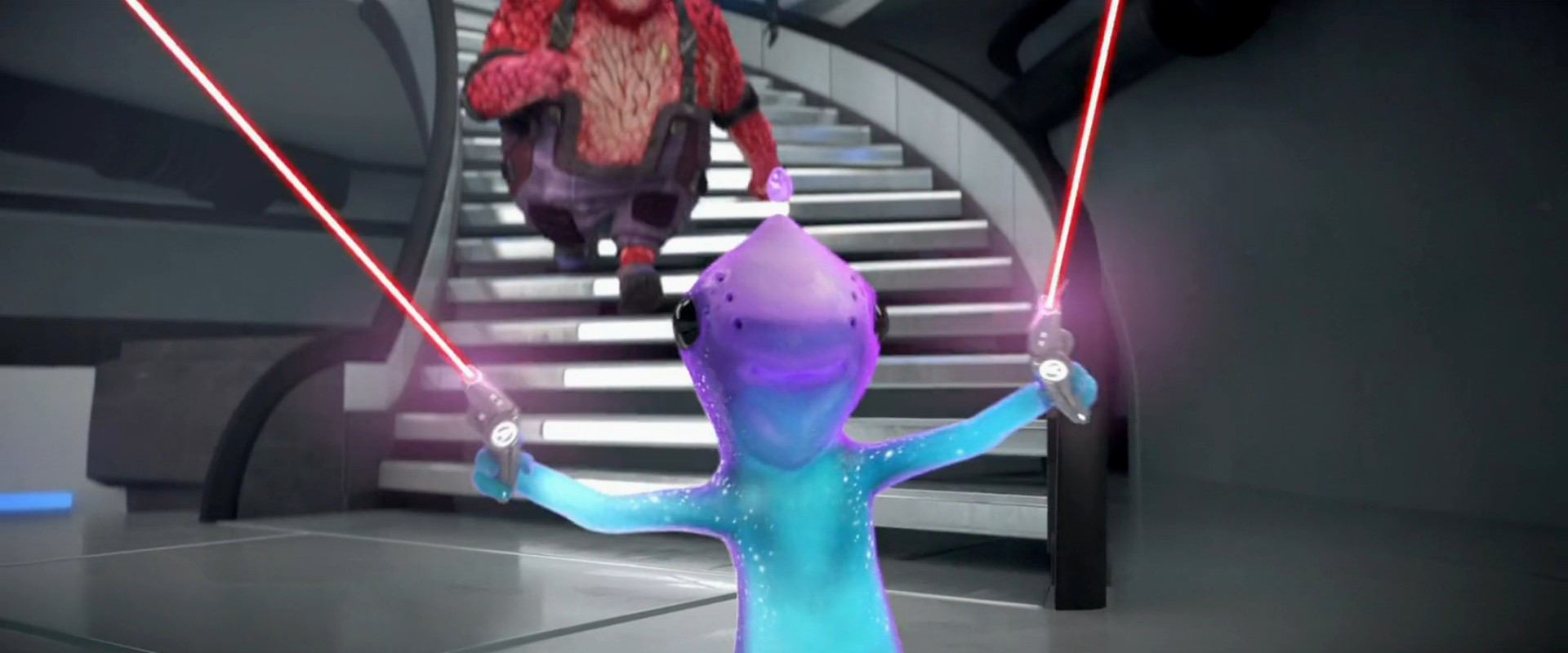
Star Trek: Prodigy
Star Trek: Prodigy is an animated series with a young target audience. Just like Lower Decks, the show has been declared canon by its producers, with much the same rationale.
It is obvious that on the visual side and as adherence to established facts is concerned, Prodigy fits in just as well as Lower Decks. Although the series is made for teens, the stories have the necessary level of maturity to qualify as something that could happen in a "serious" live-action series, perhaps even rather than Lower Decks with its overall more comedic approach. Since I don't want to make up complex sets of criteria or even case-by-case exceptions, the canon status of Prodigy at EAS is the same as of TAS and Lower Decks.Very Short Treks
Very Short Treks is an animated anthology series that was created in 2023, to celebrate the 50th anniversary of TAS. It includes absurd situations, out-of-character behavior, instances of breaking the fourth wall and sometimes plain tastelessness, which goes well beyond what is customary in the other animated comedies. According to the trailer, Very Short Treks is "anything but canon".
The reception of the first three Very Short Treks was negative. Especially "Worst Contact" was almost unanimously panned for being disgusting and opposed to the core values of the franchise. I was close to puking when I watched it. I think the note that the series is "anything but canon" is like a trigger warning, and perhaps an apology (even though the rest of the series is better). There is no reason to ascribe a gratuitous canonicity to Very Short Treks, and I am glad if I never have to care about the snot people again. The series will be totally disregarded at EAS.


Star Trek: Scouts
This is a series for preschool kids, which is branded as Star Trek, produced and marketed by Paramount. Unlike Very Short Treks, it doesn't come with an "anything but canon" disclaimer, which would suggest it is meant to be canon. Yet, Star Trek: Scouts has only a vague similarity to canon Trek. The way Starfleet works, the science and the technology are extremely kidified. Visual cues such as the Starfleet delta are so generic that we couldn't tell which era it is set in.
Star Trek already had one series that was aimed at a younger audience. But Prodigy was designed in a way to fit in (even more smoothly than DIS, PIC or SNW). In strong contrast, Star Trek: Scouts has "science" along the lines of "meatball asteroids". For me, this ends the debate before it starts. Even though someone at Paramount may officially declare Star Trek: Scouts canon, I will disregard the series. There will neither be reviews at EAS, nor any references to it.Star Trek V & VI
It may be just a rumor that Gene Roddenberry wanted these two movies removed from canon, allegedly because they don't reflect the true spirit of Star Trek. We may have to wonder anyway why Roddenberry was so opposed to the alleged racism in "Star Trek VI" (according to director Nicholas Meyer), a movie that came into the theaters after his death, that he condemned it before it was even completed.
Unless a confirmed statement by Gene Roddenberry is available, EAS will continue to regard these movies as canon. And even if the ban is authentic, I see no reason to suddenly decanonize essential parts of the Star Trek Universe, irrespective of the silliness of "Star Trek V". At one point the official site implicitly acknowledged the fans' moaning about "Star Trek V", but it is exceedingly unlikely that the movie will ever be officially removed from the canon.
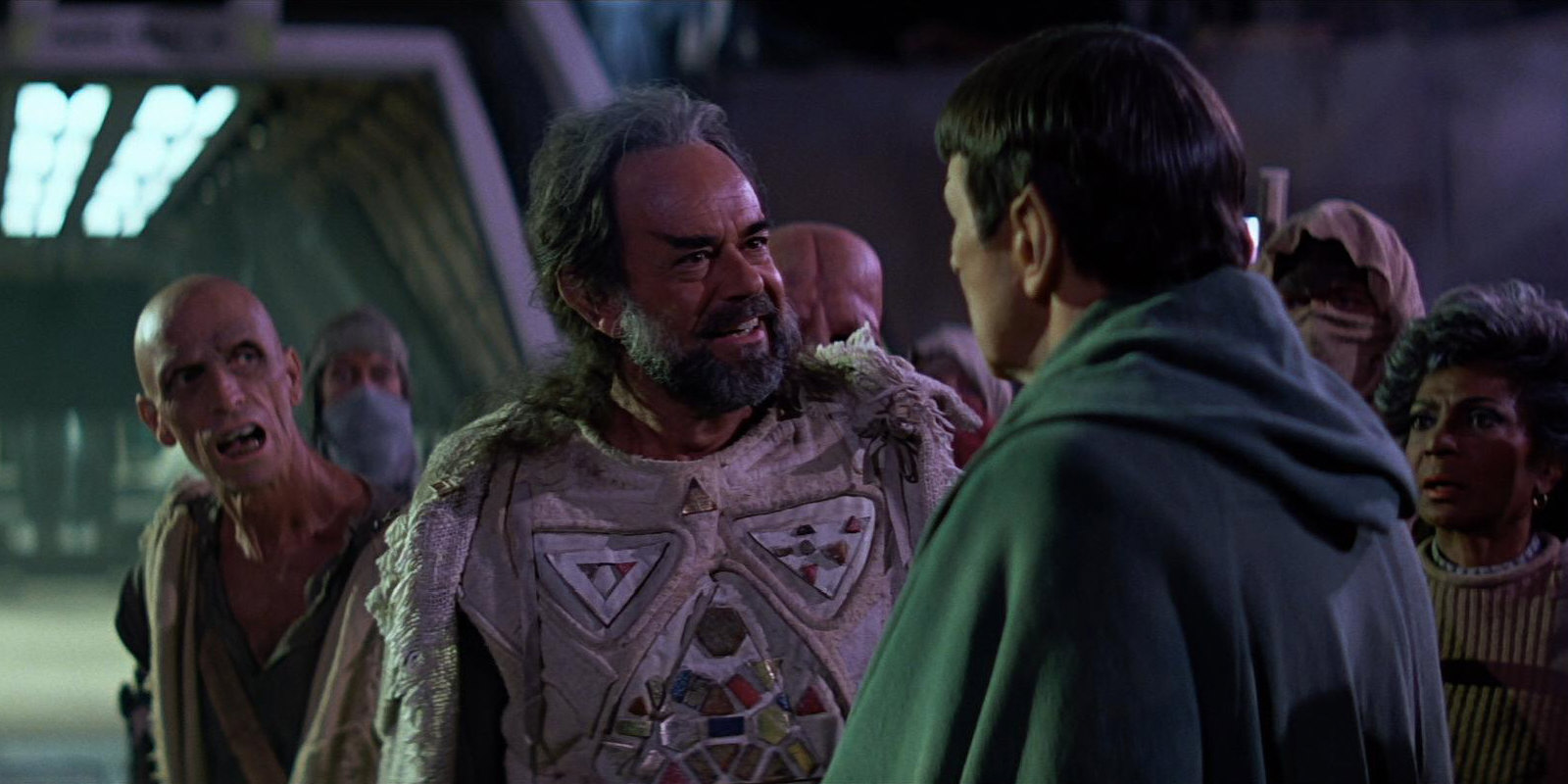

"Discoverse"
The first two seasons of Star Trek Discovery are officially set in the 2250s of the Prime Universe. There is no doubt that the producers of the series consider Discovery an integral, fully canon part of Star Trek. Yet, the series does not adhere to the existing canon at all on the visual side. Established looks were completely redesigned far beyond what could qualify as a visual update, most obviously everything related to the Klingons. The changes are much more than only cosmetic. They are not rooted in real-life progress of visual effects and make-up techniques but unquestionably in the desire to create something very different looking than the Star Trek as we knew it. Furthermore, the series establishes events that couldn't realistically have occurred in the 2250's and lots of technologies that should not yet exist or should not exist at all. The latter are explained in "Such Sweet Sorrow II", but more like in an "out of sight, out of mind" fashion. After the setting of Discovery has been changed to the far future, where the damage to the continuity can be kept in check. The spin-off Strange New Worlds was launched in 2022 and continues to take place in the 2250's. This series respects the looks and facts somewhat more than Discovery and eventually ditches the rebooted Klingons for the classic ones.
 EAS acknowledges the official stance that Discovery and Strange New Worlds are canon Star Trek series. But there are colossal obstacles to their full integration because practically all visuals as well as numerous other facts of the series vehemently clash with what has been established before. The continuity issues are even worse than those with the Abrams movies (see below), considering that Discovery and Strange New Worlds are supposedly set in the Prime Universe, just a few years before Kirk takes command of the Enterprise. In cases of conflicts, I will give the existing Star Trek precedence, and I will never try to blend in the Discoverse with far-fetched explanations, unless these are hinted at in the stories themselves. Discovery tried to reconcile a few visuals and other facts with canon since its second season, but couldn't bridge the wide rift that had previously opened. Strange New Worlds continues to make a few things look a bit more like they did in TOS. But DIS and SNW will stay in confinement at EAS.
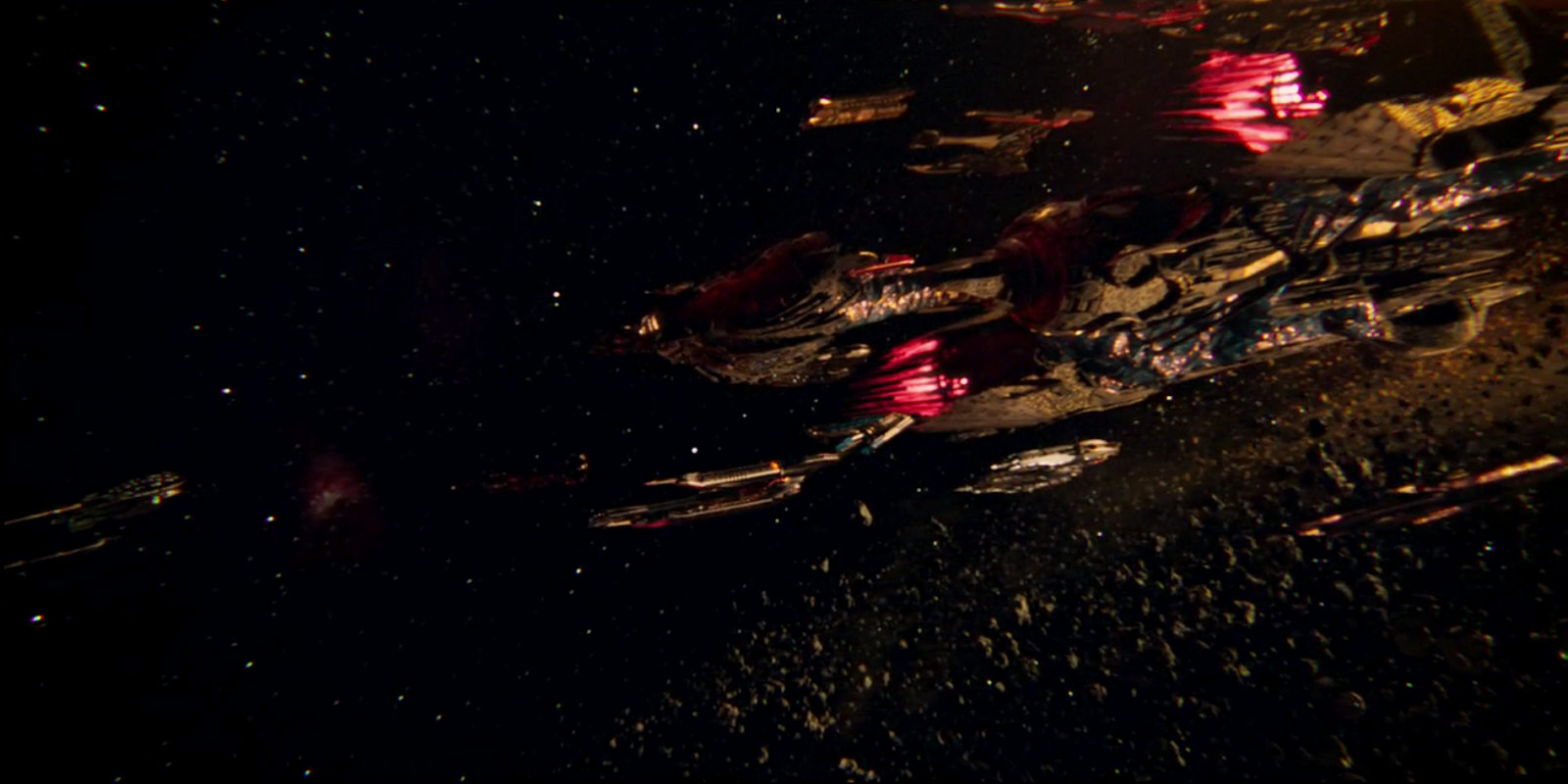

"Abramsverse"
It was the intention of producer and director J.J. Abrams and his staff to reboot the franchise while respecting Star Trek's continuity. "Star Trek (2009)" takes place a few years before The Original Series, but establishes an entirely new timeline (officially called the Kelvin Timeline). The "Abramsverse" is fully canon. At least, this is the official position.
 The new movies are set in a different continuity that is incompatible with that of the rest of Star Trek. This, however, is no reason why it shouldn't be canon, just like the Mirror Universe established in "Mirror, Mirror" is canon too. The Abrams movies will remain confined at EAS because I don't want to mingle the different timelines. But thinking further about it, even the USS Kelvin, a ship that must already have existed in the old continuity, and several other things are extremely hard to reconcile with Star Trek as we knew it (and with Discovery just as well). This is why I put "Star Trek (2009)" and the follow-ups in the Abramsverse in its entirety into a proto-canon limbo at EAS. I am aware that this "stigmatizes" the movies, but there are huge issues with the changes made to just everything in the Abramsverse, not just with its history and technology but also with the characters and storylines.
Star Trek: Countdown and Nero
These two comic series are tied into the story "Star Trek (2009)". In an interview with Trekmovie.com, dated 9 December 2008, "Star Trek (2009)" writer Bob Orci said that he personally considered some novels canon, but that it is not up to him to declare Countdown canon. In a later Q&A session, dated May 22, 2009, he explained the inconsistencies between the movie "Star Trek (2009)" and Countdown with the comic being non-canon. The same applies to the Star Trek: Nero comics and the whole story about Nero's imprisonment on Rura Penthe.
The two comic series are ignored at EAS, just as all Trek comics and all novelizations of Trek movies. I don't expect them to ever gain official canon status, and even then the movie would have to be given precedence with regard to several existing discrepancies.Webtoon comics
Two stories, Stargazers and Recollection, were released on the platform Webtoon in 2026. According to a press release from May 15, they are "canon". No further recognition beyond this announcement has taken place, however.
It is obvious that the one-time statement of the two web comics being canon was just a publicity gimmick, to assign a significance to them they just shouldn't have. Webtoons will not be referred to at EAS.Official reference books
Books are non-canon because of their printed nature, even those officially released by Paramount/CBS via Pocket Books and authored by people working on the show (reviews). The TNG Technical Manual and the DS9 Technical Manual can be regarded as apocryphal because a good deal of them consists of facts that supplement the scarce technical information provided in the series itself and that were expected to be an official guideline for the writing staff too. The same applies to the Official Starships Collection and other ship-related publications by Eaglemoss in more recent years with their information on names and registries that were supposedly on the actual CG models. The Star Trek Encyclopedia extracts data from the canon episodes. Where it is correct, it is a reproduction of canon facts, but not canon by itself. Even a few occurrences of False Canon can be found in the Encyclopedia.
So why does EAS take data from official reference books into account, especially from the TNG Technical Manual, the DS9 Technical Manual, the Star Trek Encyclopedia and the Official Starships Collection, although they are non-canon? Obvious examples are the registries of many ships of the Constitution class, some class names of the TNG era that were never mentioned on screen and some details about warp drive and other technology. The difference between these reference works and the novels is not immediately obvious. However, the novels enter a competition with the episodes because they both tell stories, while the TNGTM is a book that we could find on Geordi's desk. The manual adds information that can be included into the realm of canon without major efforts, and without envisioning characters and environments like they are described in a novel or shown in an episode. Moreover, but this is just a practical consideration, in technical Trek discussions it is very useful to have some basics nailed down like the existence of a primary deuterium tank on a starship, even if they are never mentioned in the series.Star Trek Technical Manual
Prior to TNG, the STTM (review) was commonly regarded as authoritative, yet no one called it "canon" when it was released in 1975. It was a time when no Star Trek was on air and when fans were hungry for any kind of information. So the author, Franz Joseph Schnaubelt, got the blessing from Gene Roddenberry to write a technical manual of Star Trek. Franz Joseph went ahead and created a manual that included schematics of canon devices, rooms, uniforms. He supplemented this with what we would call fan fiction today, namely the Federation Charter, emblems of alien civilizations and the ship schematics.
Even if we attempt to establish an exception, the STTM as a whole fails to fulfill the requirements for canon data in several regards. First of all, a definition of canon didn't technically exist when the STTM was written. And as unfair as it may seem, just when Roddenberry set up the canon policy for TNG, the STTM was not included.
Side note Some time prior to TNG, they didn't get along with each other any longer, and it is said that Roddenberry intentionally laid out technical specs of TNG so as to disparage Franz Joseph's work - but this doesn't really belong here. If you would like to know more about Franz Joseph's background, please visit Trekplace.
Secondly, no printed publication, not even the official technical manuals by Sternbach or Okuda, are regarded as canon themselves, but at most as apocryphal. Thirdly, certain major parts of the manual are of a debatable nature or are anti-canon, like the alien emblems, the map of the galaxy, the Federation Charter (actually a mostly literal rip-off of the UN Charter) and the circuit schematics of the tricorder etc. I simply wouldn't want to include these just to have a couple of more ship names on the list.
The STTM is certainly non-canonical. Here at EAS it is not regarded as apocryphal either for several technical and practical considerations. Few single aspects of the book are canon though, simply because ship schematics from the STTM were used in "Star Trek II". But this certainly doesn't imply that the ships that can be glimpsed in the movie are exactly what they are meant to be in the book, much less that the vast number of names and registries printed there are "authentic".Fandom reference books
Unlike the at least apocryphal TNG Technical Manual, the DS9 Technical Manual and the Star Trek Encyclopedia, publications like those of FASA, Jackill or Todd Guenther are unquestionably non-canon, as is the Spaceflight Chronology too. The same applies to some more recent books like Star Trek Star Charts (review) or The Starship Spotter. From Paramount/CBS's viewpoint they fall into the same category as novels, even if some depictions from FASA manual made it into TNG episodes. But this must be seen rather as an accident because the Art Department is usually quite careful not to include copyrighted material.
Licensed or fandom tech manuals are ignored at EAS the same way they are ignored by Paramount/CBS. Moreover, I don't see why a printed or a commercial fan fiction should be in any way more valuable than a free one on the web such as The Starfleet Museum.Star Trek Online
Ship designs from the MMORPG Star Trek Online appear in the second and third seasons of Star Trek Picard. This has prompted some fans to declare that "all STO ships are canon now" or "all of STO is canon now". This is a misconception. Single ships from the Star Trek Technical Manual or even from other sci-fi universes have appeared in Trek shows and movies before, without making their origins canon within the Star Trek Universe.
Irrespective of the quality and of the realism of the STO starship designs (which are often rather imitations of canon classes, rather than variations), the following always was and will remain a firm principle at EAS: If ships appear in a canon Trek show, they are canon. If they don't, they are not canon.Klingon language
The Klingon language devised by James Doohan for the first feature film consisted of just a few words and was later developed to a fully-fledged language by linguist Mark Okrand. Applying the same criteria to the language as to anything else in Star Trek, only the Klingon spoken on screen is canon (regardless of its consistency and of Okrand's involvement), not the complete grammar and vocabulary created by Okrand.
There is no need to define a more elaborate canon policy here at EAS as I don't speak Klingon. If I did, the language reference (The Klingon Dictionary) written by Mark Okrand would be regarded as an official reference like the TNG Technical Manual.Behind-the-scenes information
This is an interesting point to be considered because some of the behind-the-scenes information is widely accepted without actually being canonical. For instance, the Miranda class was never called by that name in any episode, not even in a screenplay. Still, it has become the commonly accepted name of the ship class thanks to the Star Trek Encyclopedias (well, until the 1990s rivaled by the fandom name "Avenger class"). Fundamentally, behind-the-scenes information as it can be found in official reference manuals is just as apocryphal as these books are in their entirety.
Practical reasons require that some apocryphal information is treated as if it were canon. Otherwise long-standing facts like the name "Miranda class" would have to be dropped and replaced with something indefinite. We can be absolutely certain that, if the class name should ever be mentioned on screen, it will be Miranda.Script contents
Like with information from behind the scenes, most screenplays (or preliminary version thereof) include additional lines or annotations that find their way into fandom but not into the final episode or movie. We certainly need to disregard them as soon as they are contradicted by canon facts. This happens with the so far common notion that the Klingon BoP in "Star Trek: The Search for Spock" was actually a Romulan vessel. The Klingon retro-BoPs in ENT: "Expanse" is the ultimate proof that there is no Romulan link. In some other cases there were little facts, especially names in scripts that were not mentioned on screen.
Some of the apocryphal extra information in scripts is taken into account at EAS. The policy is still not completely settled on this issue, but essentially EAS accepts just names and dates, not concepts. For instance, the Klingon shuttlepod from ENT: "Broken Bow" is called "K'toch class" in the EAS database because it was in the script. On the other hand, Saavik's half-Romulan origin is ignored even though it was hinted at in the script of "Star Trek: The Search for Spock".Cut scenes/additional scenes
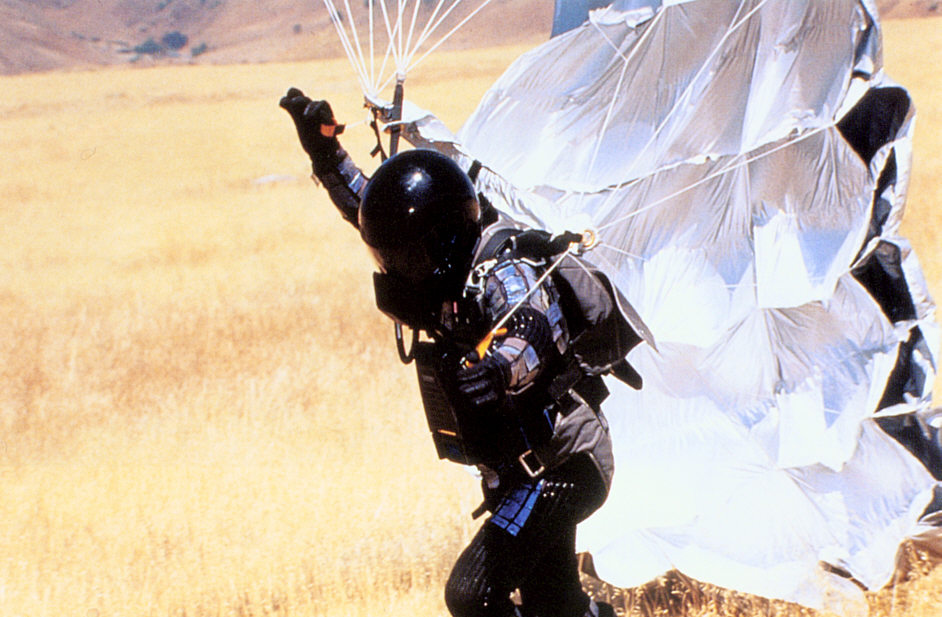
Did Picard and Data drink wine in "Nemesis" or not? The DVD has an additional scene, which is not in the theatrical version. Moreover, this scene is not embedded into the very movie track, but separate. The same question, with a more definite impact, crops up in "Star Trek: The Undiscovered Country". The scenes with Colonel West were cut from the movie, but inserted into later releases. So does he exist at all? And what about Kirk's orbital skydiving in "Generations", which was only available in the internet so far?
Without forgetting about the original versions, EAS generally takes into account additional or changed scenes if they were included in a way to form a new and improved version of the movie, most obviously in the case of "Star Trek: The Motion Picture" (new Vulcan landscape and V'ger's revised diameter in the Director's Cut). On the other hand, anyone who can rip a movie could easily insert unused scenes that were kept separately to where they belong, but we are obviously not supposed to view the movies like that. The decision what to take into account is the same as with the already mentioned script contents and remains somewhat arbitrary.
TOS and TNG Remastered
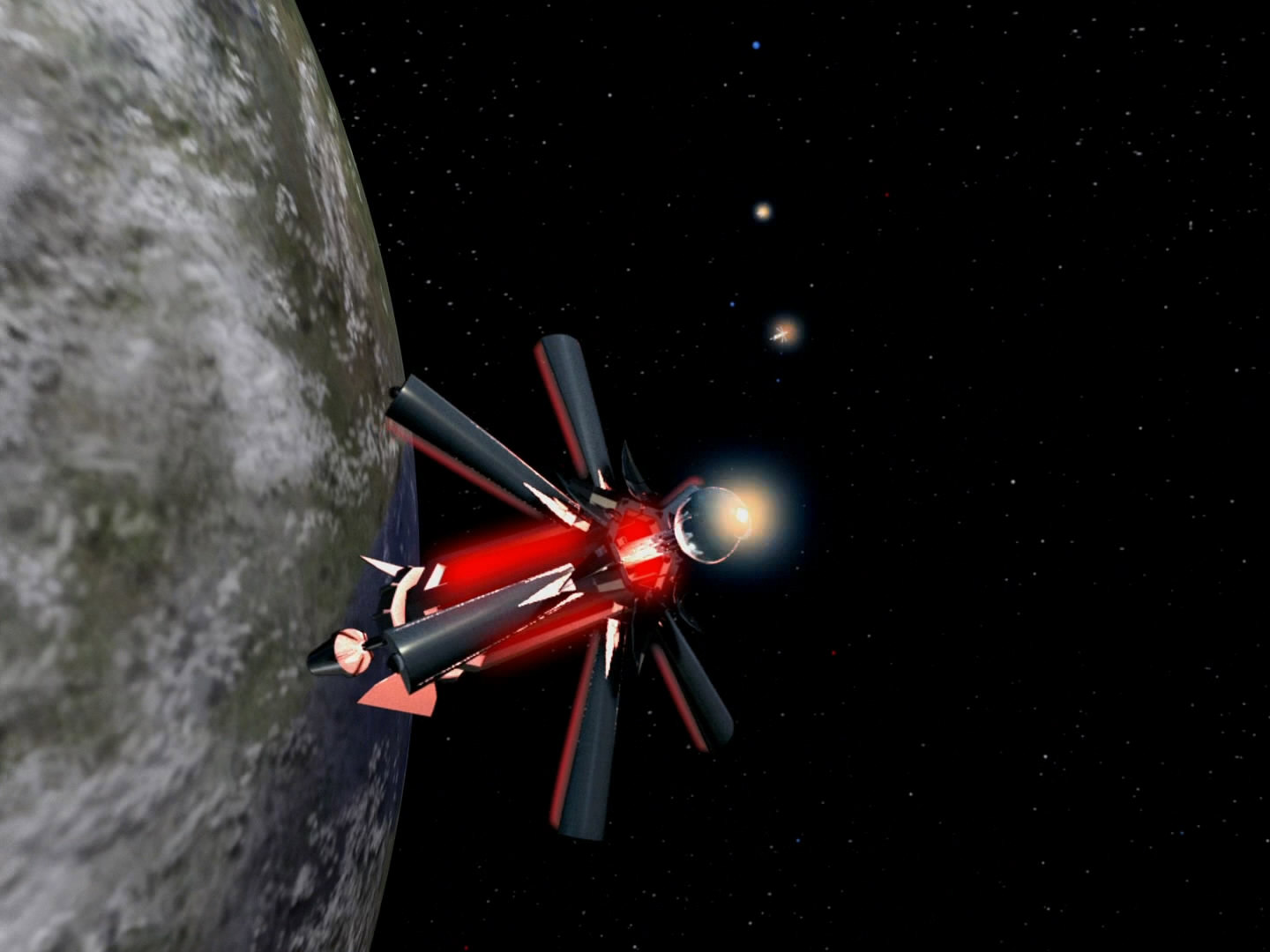
Although the producers have reassured us that nothing is changed in the storylines, the remastering (TOS-R) of The Original Series still stirs up continuity issues. The remastered version comes with improved effects such as of phaser shots, with new planetscapes and with new vessels too. TOS-R is designed to be more internally consistent. But which is correct: the old phaser beams that were occasionally red, or the new consistently blue ones? The old blurry planets, or the new highly detailed ones? Note that, once again, the question what is canon should not be primarily about quality or taste. The same question arises with the remastered version of TNG (TNG-R), although here the changes are less extensive.
 This case is similar as with the Director's Cut of "Star Trek: The Motion Picture". Only the extent of the retcons in TOS-R is larger. There are TOS purists who only accept the episodes the way they always were (although Roddenberry would probably have been the last person not to try to improve its look). But even if the old TOS is hammered in stone, there is no reason why the remastered version shouldn't be equally valid. In other words, EAS treats both as canon. In practice, TOS-R can often be interpreted as a more realistic or more complete depiction of the very same places and events as in TOS without any trouble (unless we insist on the Enterprise having a mechanical clock as seen in TOS: "The Naked Time" or Earth being completely cloudless as in TOS: "Tomorrow is Yesterday"). Still, occasionally the visuals of TOS were amended more extensively, like the "flying dildo" of TOS: "Spock's Brain", which was replaced with a "pod ship" in TOS-R. In these cases I will give TOS precedence. Whenever new facts from the remastered version become available, there is a disambiguation at EAS like "In the original version... whereas in remastered TOS...". Additionally, facts from the remastered version will be tagged with an according symbol. The same applies to TNG-R.
Parallel timelines/universes
Many fans tend to disregard silly or disagreeable places like the DS9 version of the Mirror Universe because it is not "our" universe after all. Some extend this practice to whole incarnations of Star Trek, such as Star Trek Enterprise, the Abrams movies or Star Trek Discovery. They assert that these take place in alternate universes and hence should be discarded as non-canon. The official canon policy, however, makes no difference between such "unreal" and "real" events. Even the contents of dreams or hallucinations are canonical in the sense that it is visible on screen.
There is no point in declaring anything non-canon because it doesn't happen in "our" Star Trek Universe. The fact (or assumption) that there are different timelines has to be reflected by splitting up timelines, not by a-priori omission of "parallel" events.Contradictory canon
Their canon nature doesn't prevent information from the live action series from sometimes being contradictory. This may happen because of negligent writing but also in case of a deliberate retcon or reboot. In some cases the contradictions may be explained away rather easily. However, the speculation itself should not be declared canon, keeping in mind how fans tend to make up a headcanon and act like it's the only valid solution. Sometimes it's better to leave a canon issue unresolved than to either handwave it or to patch it up with wild mental gymnastics. A prominent pre-Discovery example of is the Trill Problem, a fundamental revision of the nature of this race that defies a complete explanation. Star Trek Discovery takes this several steps further, by redesigning the Klingons, the arguably best-known alien race of Star Trek, without providing an in-universe rationale.
Contradictory canon still is canon. It can be discussed which version is "more correct" and explanations can be worked out using more or less conjecture, but that doesn't change anything about their canonical nature. Needless to say that the views and theories on such problems presented here at EAS are non-canon.


The real world
Is the real world canon in Star Trek? The question wouldn't arise in a galaxy far, far away. But since Star Trek aims to depict the very future of humanity, its past has to be taken into account. The real world influences Star Trek by providing historical side notes, character and ship names and locations on Earth. In this sense the real world is canon, although Star Trek sometimes alters the course of human history or even the laws of physics. As long as the fictional events are set far enough in the future, there is no danger of our real world becoming "non-canon". The article on 21st Century Earth History demonstrates what happens if this precondition is not given.
Clearly the real world is taken into account in the assessment of the fictional universe here at EAS. But I don't go as far as including real-world events or real-world spaceships to the databases at this site. This would be rather pointless, considering that there are numerous websites or books that provide a deeper and more comprehensive account of the real world. As for the depiction of the 21st century in Star Trek, canon trumps the real world, even though this means we ultimately may have to admit that Trek takes place in an alternate timeline.Ex Astris Scientia
No, I don't suffer from megalomania. The reason why I'm listing EAS as a candidate for a canon source is that some fans refer to my website as canon. But actually EAS does not create any canon content. It can only convey canon data and, in debatable cases, suggest reasonable solutions with a minimum of speculation.
A request: Visitors are advised never to mention anywhere that something written at Ex Astris Scientia is "canon". EAS only contains quotations or images from canon episodes or movies but does not create canon content.
Conclusion
There are good reasons for a canon policy - at CBS/Paramount as well as here at EAS. But fans shouldn't go as far as rejecting everything non-canon from the outset; Star Trek can be more than the collected facts in the Okudas' Encyclopedia. On the other hand, there is the kind of fans who stir up canon and fandom at will, be it because of their limited knowledge about the Star Trek Universe or because they don't want their creativity be limited by the canon. In my many years in the fandom I have encountered lots of either type of fans, and any shade in between.
One typical situation (from the late 1990's) is that some people on a message board talk about the number of nacelles on canon starships and someone throws in that the Federation class and Saladin class (from Franz Joseph's Star Fleet Technical Manual) are odd-nacelled. The result is a fruitless discussion about the definition of "canon", about the authority of Roddenberry, Okuda, Paramount or Pocket Books, about books which should be considered canon because they are written by Jeri Taylor, about Colonel West and the Starfleet Marines, and so on. Very often ideas of False Canon or "headcanon" are involved too. This is one more reason why a well-established canon is a useful reference.
As a universal reference, the idea of a canon in an uninterrupted continuity worked well in the years between 1994 (release of the first Star Trek Encyclopedia) and 2005 (end of Star Trek Enterprise). The Abramsverse and ultimately Discovery call the principle of canonicity into question. While the new Star Trek is canon by its very nature, it establishes numerous facts that cannot be reconciled with the pre-existing continuity. It is an ongoing process, at EAS just like in the whole fandom, to handle the extreme discrepancies, and (as far as EAS is concerned, I can't speak for other fan projects) to still apply the same well-established criteria as they were valid until 2009. In particular, EAS will neither resort to lackadaisical apologist statements such as "there are many races of Klingons, hence the differences" (unless this shows up in a canon story), nor will I declare Discovery non-canon (because it's not up to me to make such a decision).
The canon policy at EAS accepts the definition of canon given by Paramount/CBS as a way to avoid unnecessary discussions. Actually, I would go as far as saying that EAS couldn't exist without the canon because if there were not one supposedly true and authentic version of the fictional universe, it would become utterly pointless to file and analyze anything about it beyond a mere list what happened in which episode or book. In contrast to websites that cling to a "headcanon", EAS neither ignores canon accounts at the outset nor adds non-canon information. EAS includes some apocryphal reference works only if these fill in necessary details that would never be mentioned in an episode. This doesn't mean that EAS slavishly follows the interpretations put forth in reference works.
But canon is not everything. Every fan should feel encouraged to develop a personal view (rather than a "personal canon") of the Star Trek Universe. That's what I'm doing with my ship designs, the ASDB and the Starfleet Museum too. I would never want to miss the fan-made stuff all around the planet because they really enrich the universe, no matter if I "believe" in their existence. I probably can't help those who don't even want to see anything that has not the seal of Paramount/CBS on it or the other extreme group, those who don't care about the idea of Star Trek and turn Starfleet into a military organization with big-gunned warships. For anyone in between, canon is a common ground. Everything else is left to our imagination and tolerance or better, mutual understanding. There are always possibilities!
See Also
The Realism of (Science) Fiction - whether Star Trek is really "bordering on silliness"
Handling Canon Issues at EAS and at Memory Alpha - comparison of standards and interpretations
False Canon - accounts which are incorrectly regarded as canonical in fandom or in official Trek
The Continuities of Star Trek - from a single timeline to a multiverse, and how to deal with that
The Visual Continuity of Star Trek - examples of if and how visual continuity was maintained through the generations
The Problems of Canonizing TAS - dealing with possible continuity and compatibility issues
Dealing with Continuity Issues of the Abramsverse - general thoughts and the policy at EAS
Discoverse Continuity Problems - where DIS and SNW are not in line with classic Star Trek
Credits
Some screen caps from TrekCore. Some ideas, especially concerning cut scenes, script information and other moot cases, were inspired by an article at Green Mole. Thanks also to the people at the SCN for discussing issues of canon. Thanks to Andrew Briggs for pointing me to the reason for Gene Roddenberry to condemn "Star Trek VI", to Kobi for correcting some facts about the Kzinti and to Spike for the revision of the alleged official canon policy.


